How each one actually works
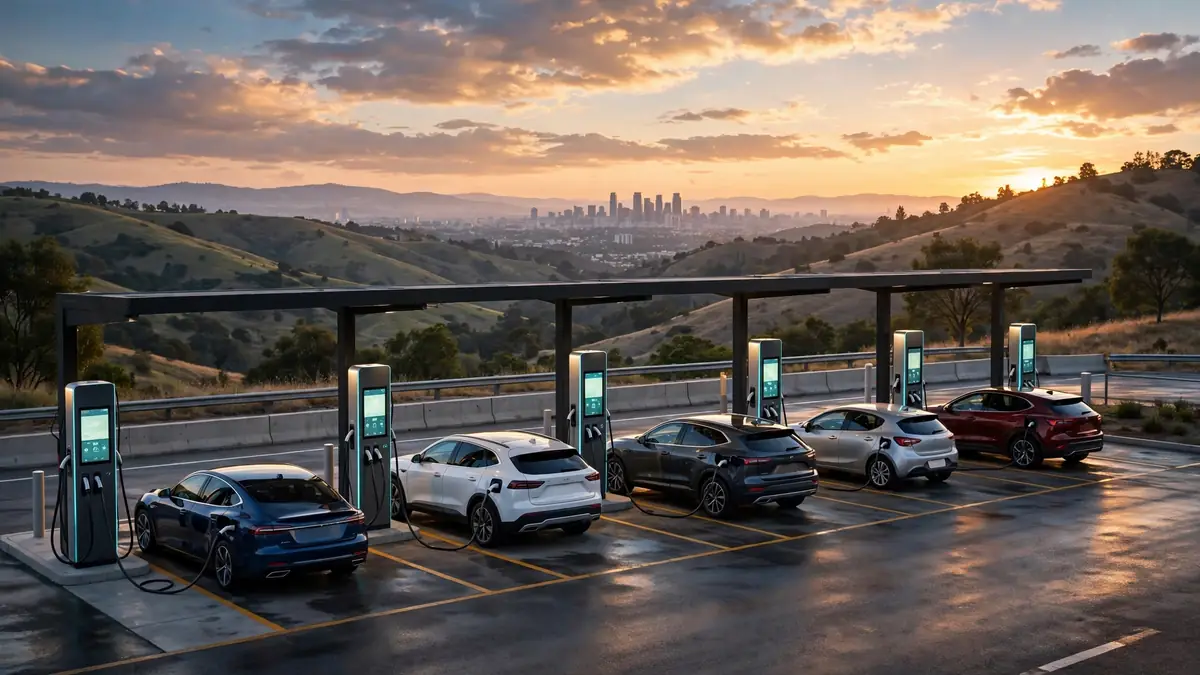
A fully electric vehicle (EV) runs entirely on a battery-powered motor. You plug it in to charge, and there is no petrol engine at all. A hybrid pairs a smaller petrol engine with an electric motor and a battery; the car decides moment to moment which power source to use, and the battery recharges itself from braking and from the engine — you never plug in a conventional hybrid.
In between sit plug-in hybrids, which work like conventional hybrids but can also be charged from the mains for a limited electric-only range. They are a compromise: electric for short trips, petrol backup for long ones. For simplicity, this guide treats "hybrid" as the conventional self-charging kind unless stated otherwise.
The driving experience
EVs are quiet, smooth and quick off the line — electric motors deliver instant torque, which makes even modest EVs feel lively in city traffic. With no gears to shift and no engine vibration, motorway cruising is calm. Hybrids feel much like familiar petrol cars, with the electric motor smoothing out low-speed driving and stop-start traffic.
Neither is objectively "better" to drive; it is a matter of taste. Drivers who value silence and responsiveness tend to prefer EVs. Drivers who want everything to feel exactly like the car they already own tend to prefer hybrids.
Costs: purchase and running
EVs generally cost more upfront than equivalent hybrids, though the gap has narrowed considerably. Where EVs pull ahead is running costs: electricity per kilometre is typically much cheaper than petrol, and EVs have far fewer moving parts — no oil changes, no exhaust system, no gearbox in the conventional sense — so routine maintenance tends to cost less.
Hybrids sit in the middle. They cost less to buy than most EVs and use noticeably less fuel than pure petrol cars, especially in town. But they still need engine servicing, and their complexity — two power systems in one car — means there is more that can eventually need attention.
The honest maths depends on your mileage. High-mileage drivers recoup an EV's purchase premium faster through fuel and maintenance savings. Low-mileage drivers may never break even on the premium, making a hybrid the cheaper overall choice.
Range and charging: the real questions
This is where buyers should be most honest with themselves. Modern EVs offer ranges that comfortably cover daily driving for most people, and home charging — plugging in overnight — makes ownership nearly effortless. The friction appears on long trips and for drivers without home charging: public chargers vary in speed, price and reliability, and route planning becomes part of the journey.
Hybrids have no such concerns. They refuel at any petrol station in minutes and their range is effectively unlimited. For drivers who regularly cover long distances, lack reliable home charging, or simply do not want to think about infrastructure, that convenience is decisive.
Environmental impact
EVs produce no tailpipe emissions, which improves local air quality — a genuine benefit in cities. Their total footprint depends on how the electricity is generated and on battery manufacturing, both of which vary widely. Hybrids cut fuel use and emissions substantially compared with pure petrol cars but cannot match an EV charged on clean electricity. Anyone buying primarily for environmental reasons should look at their local electricity mix, not just the badge on the car.
Head-to-head summary
| Factor | Fully electric | Hybrid |
|---|
| Purchase price | Higher, gap narrowing | Lower |
| Running costs | Lowest (cheap charging, minimal servicing) | Moderate (less fuel than petrol, engine servicing remains) |
| Refuelling | Home charging ideal; public charging varies | Any petrol station, minutes |
| Long trips | Needs planning | No planning needed |
| Tailpipe emissions | Zero | Reduced vs petrol |
| Driving feel | Silent, instant response | Familiar, conventional |
Which should you buy
Choose an EV if you can charge at home, mostly drive predictable distances, and want the lowest running costs and a quieter drive. Choose a hybrid if you want lower emissions without changing any habits — no charging, no planning, just better fuel economy than the petrol car you know. Choose a plug-in hybrid if your daily driving is short but you regularly need long-range flexibility.
Batteries, longevity and resale
Two worries dominate EV conversations: battery degradation and resale value. On degradation, the evidence so far is reassuring — modern EV batteries typically lose capacity slowly, and most manufacturers warranty the battery for around eight years. A well-kept EV battery will usually outlast the period most people keep a car. Extreme heat, constant fast-charging and always charging to 100 per cent accelerate wear; gentle habits extend life.
Resale values have been more volatile. Early EVs depreciated steeply as technology improved and new models undercut used prices — good news for secondhand buyers, less so for early adopters. As the market matures and battery longevity becomes better understood, residuals are stabilising, but EVs remain more sensitive to technology cycles than hybrids, which depreciate much like conventional cars. If you change cars every three years, factor this in; if you keep cars for a decade, it matters far less.
There is no universally right answer, only the right answer for your driveway, your mileage and your patience. Be wary of anyone — salesperson or enthusiast — who insists one choice suits everyone.
A practical decision routine
If you are torn, work through these questions in order. First: can you charge at home or reliably at work? A confident yes removes the biggest EV friction; a no makes a hybrid the calmer choice. Second: how often do you drive beyond the car's range in a single day? Occasional long trips are manageable with planning; weekly ones get tedious. Third: how long will you keep the car? The longer the ownership, the more the EV's lower running costs compound.
Finally, test-drive both back to back on roads you actually use, including a motorway stretch and a tight car park. Specifications tell you what a car can do; twenty minutes behind the wheel tells you whether you will enjoy doing it. Bring your normal passengers and your normal luggage — the car has to fit your life, not the other way round.
A note on incentives and timing
Many governments offer purchase incentives, tax credits or reduced running costs for electrified vehicles, and these can meaningfully change the maths — but they vary by country and change frequently. Check current local schemes before deciding, and be cautious about rushing a purchase to beat a deadline. The right car bought calmly beats the wrong car bought hastily, incentive or not.