A quiet downgrade at Fairfax
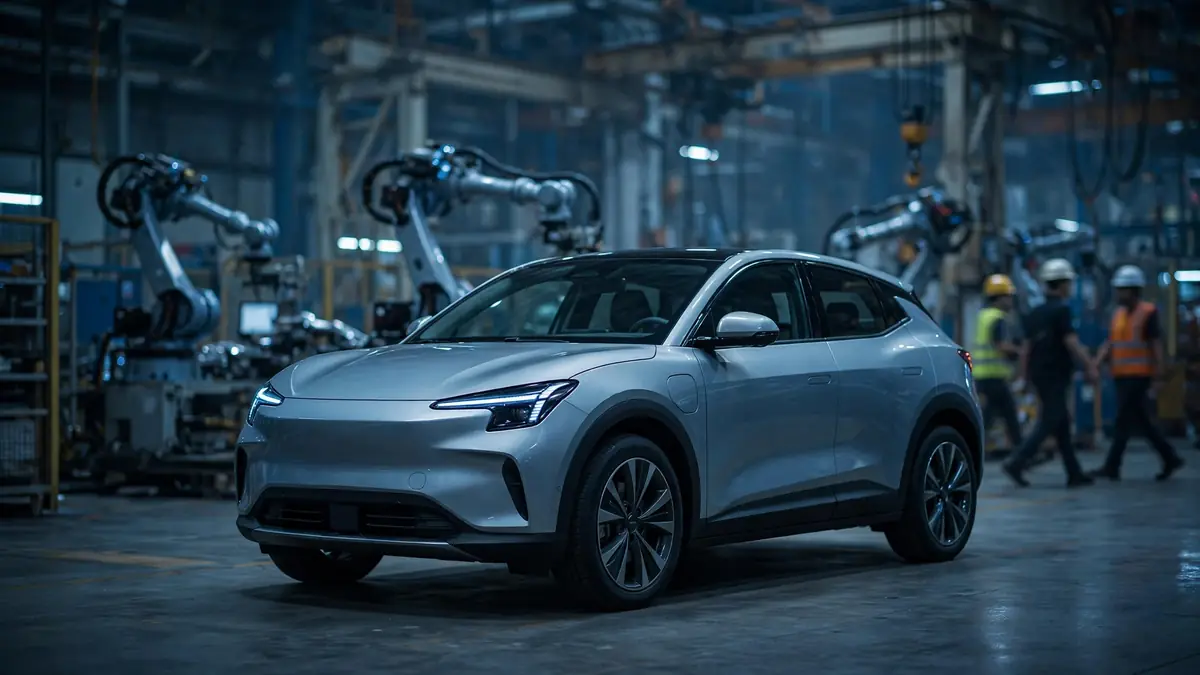
The news did not come from General Motors. It came, as these things often do, from the people who build the cars. On September 29, 2026, Reuters reported that the Fairfax Assembly Plant in Kansas City, Kansas — home of the reborn Chevrolet Bolt — is on pace to produce roughly 35,000 of the small electric SUVs before the model's production ends in the first quarter of 2027. That is about 75 percent fewer than the roughly 150,000 vehicles the plant had originally been on track to make by then.
The estimate came from Dontay Wilson, president of UAW Local 31, the union chapter representing the factory's workers. Wilson based his figures on the daily volume of vehicle production at the plant — not on a number supplied by GM, he emphasized. The automaker, for its part, declined to confirm or deny the figures. GM spokesman Kevin Kelly said in an emailed statement that the company does not comment on production volume, adding:
"We continuously evaluate market dynamics and customer demand to make decisions regarding our operations." — Kevin Kelly, GM spokesman, in a statement reported by Reuters
For a model GM has marketed from day one as a "limited run" vehicle, the cutback might look like a minor footnote. In reality, it is one of the clearest illustrations yet of how dramatically the American electric-vehicle market has been reshaped by the withdrawal of federal support for EVs.
The tax credit that changed everything
The pivot at Fairfax traces back to September 2025, when the $7,500 federal tax credit for electric-vehicle buyers was eliminated under the Trump administration. The change removed what had been, for many American buyers, the single biggest reason to choose an electric car over a comparable gasoline model. According to Reuters, plans to produce a higher volume of Bolts at Fairfax "shifted after the federal tax incentive for electric vehicles ended last year."
The broader numbers tell the same story. GM has recorded $10.9 billion in EV-related charges since the second quarter of 2025, joining other automakers in walking back large investments in battery-powered cars. Nationally, new data from the Alliance for Automotive Innovation shows that EV sales through the first half of 2026 totaled 556,477 vehicles — down 26.8 percent, or roughly 204,250 vehicles, compared with the same period in 2025, when the tax credit was still in place for most of the year.
The Bolt, conceived as an affordable entry point into electric driving, was always going to be among the most exposed models. Its appeal rested heavily on price. When GM launched the new Bolt earlier this year, it set the starting price at $27,600 and positioned the car as an affordable option in a market full of pricey EVs. Without the $7,500 federal credit sweetening the deal, that value proposition became harder to sell — and through August of 2026, GM had sold just 4,224 Bolts, according to figures reported by USA Today and the Detroit Free Press.
The Bolt's second act was never meant to be big
Context matters here. GM sold an earlier version of the Bolt from 2016 to 2023, and the model built a loyal following as one of the first genuinely affordable long-range EVs in America. The new Bolt, which went on sale early this year, was always described by GM as a limited-run product — a way to serve that loyal audience without committing the company to a high-volume program in an uncertain market.
The company has never said exactly when the new Bolt will be discontinued, only that it will be a limited run. The union's estimate now gives that vague description a concrete shape: about 35,000 vehicles total, with production winding down in the first quarter of 2027. At the pace implied by sales through August — just over 4,000 units in roughly eight months — GM may find that even the reduced run is more car than the market can absorb, unless demand picks up meaningfully in the remaining months.
That raises an uncomfortable question for bargain hunters: a genuinely scarce, affordable EV could become a collector's item of sorts, or it could simply fade quietly. What is certain is that supply will be limited. Buyers who want one of the last new Bolts will need to move sooner rather than later, and they should expect dealer inventories to be thin.
Fairfax looks beyond the Bolt
The Fairfax plant's future is already mapped out. Once Bolt production ends, the factory will begin building the gasoline-powered Chevrolet Equinox, a model GM moved up from Mexico. In 2028, GM plans to add production of the Buick Envision SUV — currently built in China — to the same facility. The transition is emblematic of a broader industry shift: GM still makes about a dozen EVs, but it has retooled several plants to build gasoline-engine models instead.
For the workers at Fairfax, represented by UAW Local 31, the shift from a small electric SUV to a pair of gasoline-powered crossovers is a reminder that the electrification of American auto manufacturing is no longer a one-way street. The plant's cadence was originally designed around 150,000 Bolts; the 75 percent reduction in that figure is as much a statement about American EV policy as it is about GM's product planning.
What it means for EV buyers
For consumers, the Bolt story carries several lessons. First, the era of cheap, subsidized electric cars in America is over, at least for now. The models that survive in a post-credit market will be those that can stand on their own economics — competitive on price, range, and running costs without a $7,500 federal nudge.
Second, scarcity cuts both ways. A limited production run can support resale values, which is good news for anyone who already owns a new Bolt. But it also means less choice: the affordable end of the EV market is thinning out just as manufacturers are pushing their lineups upmarket toward larger, more profitable electric trucks and SUVs.
Third, the Bolt's retreat underscores how quickly policy can redraw an industry's map. A year ago, the Fairfax plant was preparing to build 150,000 affordable EVs. Today it is preparing to build gasoline crossovers. For buyers, investors, and workers alike, the message is that in the American EV market, the most important variable is no longer battery chemistry or charging speed — it is Washington.
The bigger picture: a market searching for its floor
There are, however, signs that the American EV market may be finding its footing without the federal credit. The same Alliance for Automotive Innovation report that documented the first-half slump also found that EVs represented 7.9 percent of U.S. new-vehicle sales in the second quarter of 2026 — up 1.6 percentage points from the first quarter and the first sequential gain since the third quarter of 2025. Rising gasoline prices have helped: as of late September, the national average was $4.49 a gallon, according to AAA figures reported by USA Today, giving cost-conscious drivers a fresh reason to look at electric cars.
Whether that rebound is the start of a genuine recovery or a temporary bounce remains an open question. What is not in question is that the Bolt — once envisioned as a 150,000-unit program — will play a smaller role in that story than GM originally planned. The affordable EV that was supposed to carry the electric torch for working-class American buyers is, instead, becoming a case study in how policy shapes the cars we drive.
Sources