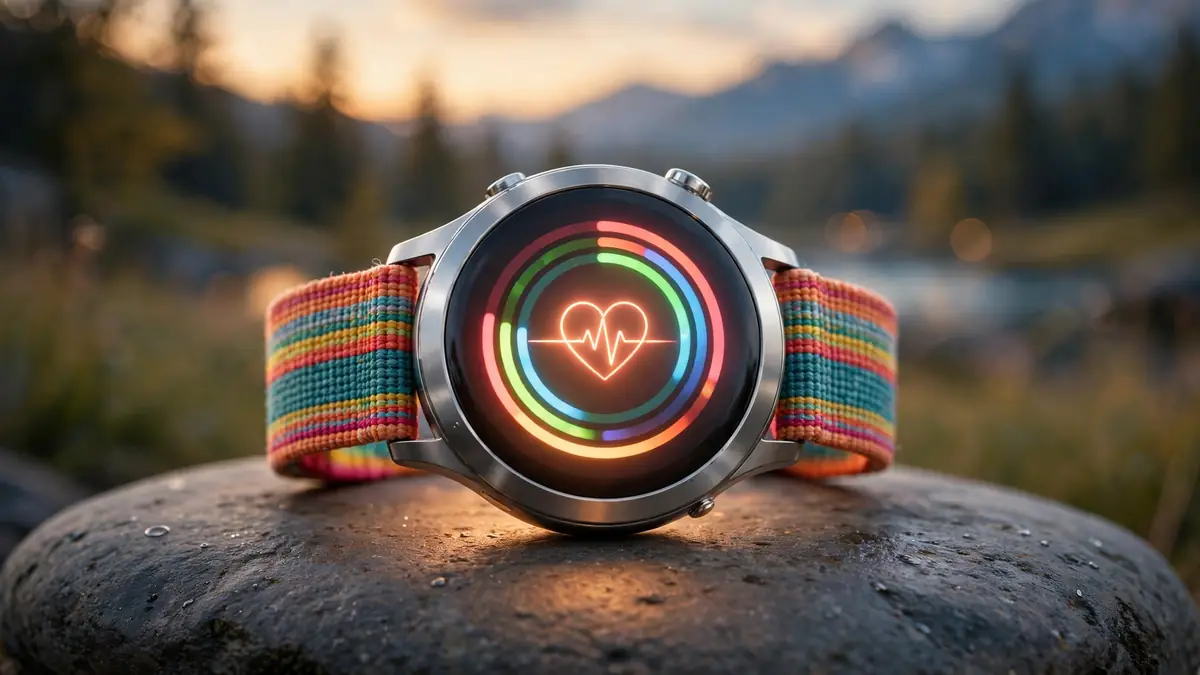
Huawei has launched its new Watch GT 7 series in Malaysia, and the headline feature is not the battery life or the brighter screen — it is a research initiative that aims to assess your diabetes risk from your wrist. The series, unveiled on September 29 with prices starting from RM1,199, arrives as Huawei sits atop the global wearables market: according to IDC's Quarterly Wearable Device Tracker, the company ranked number one globally in wrist-worn device shipments in the first half of 2026, with more than 20% market share.
The Diabetes Risk Study: what it actually does
The standout addition is the Huawei-exclusive Diabetes Risk Study, a research initiative led by Universiti Malaya. It works by combining pulse-wave signals collected through the watch's PPG (photoplethysmography) sensor with user factors such as age, gender, height and weight. After three to 14 days of continuous wear, the system produces an assessment of potential diabetes risk.
Huawei is explicit about the limits: this is a research study, not a medical feature. The results are for reference only — they cannot diagnose diabetes, monitor treatment effectiveness, or replace professional medical care. The stated purpose is narrower and arguably more useful: to encourage greater health awareness and earlier lifestyle adjustments.
That framing matters. Type 2 diabetes is one of the world's fastest-growing chronic conditions, and it is frequently diagnosed late — often only after complications begin. A wrist-worn device that nudges a user toward a blood test or a lifestyle change months earlier than they otherwise would have sought one could have genuine public-health value, even if the wrist assessment itself is only directional. The question independent researchers will want answered is validation: how well do PPG-derived risk signals correlate with clinical screening? Until peer-reviewed results exist, treat the feature as a nudge, not a verdict.
Physical Readiness Score: one number for the day
Alongside the diabetes study, Huawei is introducing its Physical Readiness Score — a single daily assessment that rolls together recovery, heart rate variability, sleep, activity and emotional wellbeing. The idea is familiar from competing platforms: Apple's new Readiness app on the Watch Series 12 does something similar, and Garmin has long offered "Body Battery." The trend across the industry is clear — wearables are moving from raw metrics to synthesized daily guidance.
Whether one synthesized score is better than five raw numbers is an open question, and it is worth watching whether Huawei publishes the weighting logic behind its score. Opaque scores that cannot be interrogated are less useful than the raw data they summarize.
The hardware: premium materials, marathon battery
The lineup splits into the standard Watch GT 7 in 46mm and 41mm sizes, plus the higher-end GT 7 Pro. Pricing starts from RM1,199, and the range is clearly designed to look and feel premium rather than clinical:
- GT 7 Pro: nano-tech ceramic bezel, aerospace-grade titanium alloy frame, sapphire glass; offered in Yellow, Green and Black.
- GT 7 46mm: Yellow, Blue and Black.
- GT 7 41mm: Pink, Blue, White and Grey.
Across the series, the AMOLED display reaches up to 3,000 nits of peak brightness for outdoor visibility — a spec that matters for runners and cyclists, not just spec sheets. Huawei's new EasyCross Strap uses a tuck-under design for a cleaner, more secure fit.
Battery life remains the GT series' signature strength: up to 21 days on the Pro and 46mm models under light-use conditions, and up to 14 days on the 41mm. In a market where Apple and Samsung flagships still need charging every day or two, three weeks of runtime is a genuine differentiator — and one of the reasons Huawei's wearables keep selling in volume.
Durability has been upgraded too: triple protection with a super-hard metal coating, IP69 dust resistance and 5 ATM water resistance. The Pro model adds CE- and MDA-certified ECG functionality and Touch 'n Go QR payments, among other everyday features.
Sports tracking gets serious
For outdoor athletes, Huawei has upgraded positioning with Enhanced AI-XDR Positioning for more reliable route tracking in challenging environments, plus Smart Route Reconstruction that estimates sections affected by GPS signal loss — useful in urban canyons and dense forest trails. The Pro model gains new golf features, including Plays-like Distance and Shot Distance tracking, while cyclists get Intelligent Climbing Planning, Sharp Turn Alerts and Lactate Threshold Analysis.
This is Huawei taking direct aim at Garmin's core territory. Golf and cycling analytics are the features that keep serious athletes locked into a single brand's ecosystem, and Huawei is clearly betting that its battery advantage plus premium build can win converts.
Why Malaysia, and why now
Launching in Malaysia first is strategic. Southeast Asia is one of the fastest-growing wearables markets in the world, and the Universiti Malaya partnership gives the launch local scientific credibility. Pre-orders opened through Huawei's official channels with an RM100 deposit, sweetened by free gifts worth up to RM713, a limited-time RM100 rebate and installment options.
More broadly, the GT 7 reflects where the wearables industry is heading: proactive health awareness rather than passive tracking. The device is less interested in telling you how many steps you took and more interested in telling you what to do about it. Samsung, Apple and Google are all moving in the same direction — but Huawei, with its number-one global shipment position and three-week battery life, currently has the volume to push the category forward.
The caveats worth keeping
Three notes of caution. First, the Diabetes Risk Study's clinical validity is unproven in public; treat it as a wellness nudge. Second, Huawei's wearables run outside Google's ecosystem, which affects app support and notifications for some Android users in Western markets. Third, synthesized scores like the Physical Readiness Score are only as good as their transparency — the more these devices tell us what to do, the more we should ask how they reached their conclusions.
None of that diminishes the achievement here. A smartwatch that lasts three weeks, tracks your golf game, and might — with further research — help catch metabolic risk earlier is a serious piece of hardware. The GT 7 is the clearest sign yet that the wearables race has moved beyond step counting for good.
Sources