A decade-old award finds its most deliberate laureate
The Sir John Soane's Museum has named British-Iranian architect Farshid Moussavi as the recipient of the 2026 Soane Medal, its annual award honouring an architect whose work has made a lasting contribution to the discipline. Announced in late September 2026, the award makes Moussavi the 10th winner of the medal since it was established in 2017 to celebrate the museum's founder and his ambition to bring attention to the importance of architecture in people's lives.
The jury's citation is striking for what it chooses to praise. Rather than singling out a single building or a signature style, the jury honoured what it called Moussavi's "sustained and rigorous" contribution to architecture pursued simultaneously through building, teaching, and writing — a career spanning nearly four decades in which, in the jury's words, ethics in architecture has been a matter of practice rather than proclamation.
Moussavi founded Farshid Moussavi Architects in London in 2011 and is a professor at the Harvard University Graduate School of Design, where her teaching and writing have shaped a generation of students. Her built work is deliberately wide-ranging: the Museum of Contemporary Art in Cleveland, the Ismaili Center in Houston that opened in 2025, the Harrods Toy Department in London, the La Folie Divine apartments in Montpellier, and the Yokohama International Port Terminal, designed during her years in partnership with Alejandro Zaera-Polo at Foreign Office Architects.
The jury's argument: ethics as practice
The most quoted passage of the announcement comes from the jury chair, architect Amin Taha: "For nearly four decades, Farshid Moussavi has demonstrated that ethics in architecture is not a matter of proclamation but of practice — that a building's moral life resides in the countless decisions, large and small, through which it shapes the everyday experience of those who use it."
Taha went on to sketch what the jury sees as Moussavi's distinctive position in the profession: "In a profession often tempted by spectacle on one side and resignation on the other, Moussavi charts a third path: attentiveness." She teaches, he said, "that architects cannot control how their buildings will be used or perceived, and that this uncertainty is not a limitation but an ethical opening, an invitation to design with humility, curiosity and care for lives other than one's own."
It is an unusually philosophical citation for an architecture award, and it lands at a moment when the profession is wrestling with exactly the questions the jury raises. As climate targets tighten, as housing crises spread across the cities where Moussavi works, and as the starchitect era gives way to something more uncertain, the idea of attentiveness — careful, humble, patient design — is being proposed not as modesty but as a method.
The buildings behind the medal
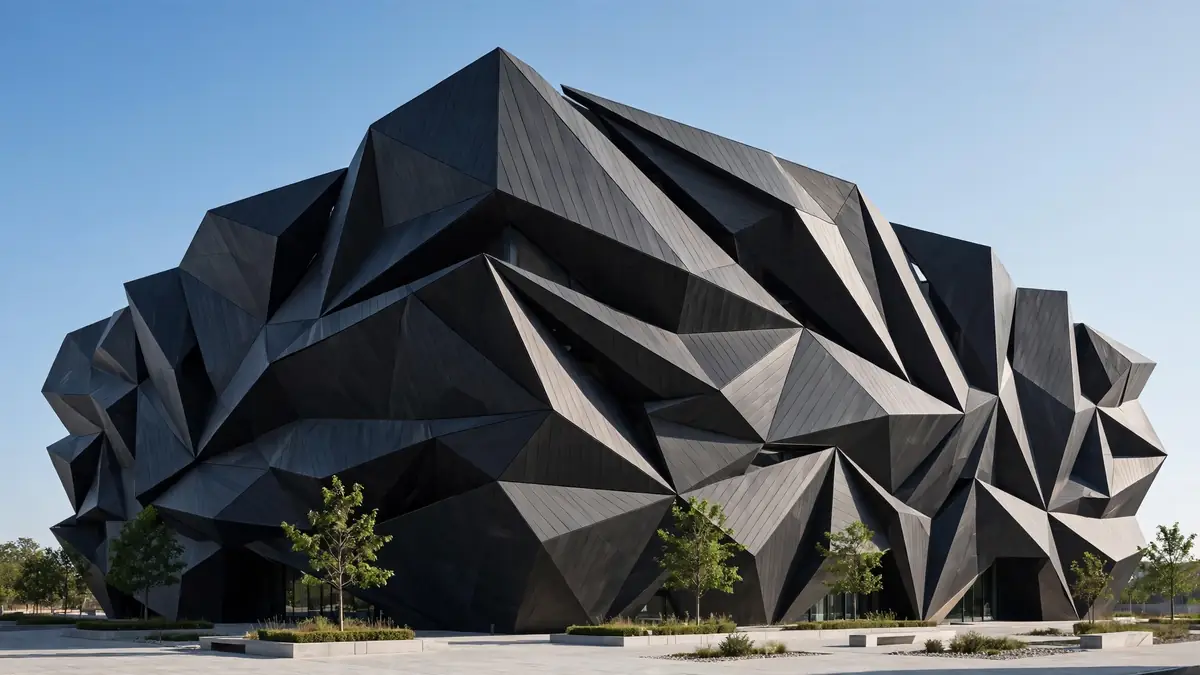
Moussavi's portfolio gives the citation its substance. The Museum of Contemporary Art Cleveland, completed in 2012, is a dark stainless-steel hexagon that rises from a triangular downtown site — a building that manages to be both a landmark and a machine for looking at art, its faceted surfaces changing character with the light. The Ismaili Center in Houston, completed last year, is a quieter achievement: a civic and religious complex for the Ismaili Muslim community whose calm geometry and crafted interiors have been photographed extensively by Iwan Baan and discussed as a model for contemporary sacred architecture.
The earlier work with Foreign Office Architects includes the Yokohama International Port Terminal, one of the most influential public buildings of the early 2000s — a continuous folded landscape of deck, park, and terminal that erased the boundary between infrastructure and public space. The La Folie Divine apartments in Montpellier took the idea of the façade as a crafted surface and pushed it toward something almost textile-like, while her retail interiors for Harrods showed the same rigour applied at the scale of a shop floor.
Across these projects, a consistent thread runs through the work: an interest in the building's envelope as something that does more than decorate — something that organises light, views, material performance, and public life. Moussavi's books, including her studies of architectural function and style, have argued that architects should take the full range of a building's functions seriously rather than treating form as the only legitimate subject of design.
Why the Soane Medal matters
Founded in 2017, the Soane Medal is young by architecture-prize standards — far younger than the Pritzker or the RIBA Royal Gold Medal — but it has quickly established a distinctive voice. Where other prizes tend to reward a body of built work, the Soane Medal has consistently honoured architects who have shaped the discipline through multiple channels: building, teaching, writing, and advocacy. Its laureates form a roll call of architects whose influence extends beyond their own commissions.
Moussavi becomes the 10th name on that list, and the award places her in a lineage that the museum takes seriously. Sir John Soane, the museum's founder, was himself an architect who understood that buildings, teaching, and collecting belong to the same project — his own house-museum in Lincoln's Inn Fields is the physical evidence. The medal was created to honour that integrated idea of architectural life, and Moussavi's career — practice, professorship, and published research running in parallel — is arguably its purest embodiment.
What comes next
Awards of this kind do more than honour a career; they set an agenda. By choosing Moussavi in 2026, the Soane jury has effectively argued that the profession's most urgent virtue is not invention but attention — to materials, to users, to the small decisions that accumulate into a building's moral life. It is a message aimed squarely at young architects, for whom the citation reads as both encouragement and instruction.
The practical consequence is likely to be a renewed spotlight on Moussavi's current work and teaching. Her studio's recent and forthcoming projects will now be read through the lens of the medal's citation, and her Harvard teaching will attract still more attention from students looking for a model of practice that refuses the choice between spectacle and resignation. In a profession searching for its bearings, the Soane Medal's tenth laureate offers something unfashionable and timely: the idea that caring about every decision is itself a form of ambition.
Sources