Disclosure: Meridian has not independently tested the Bose Ultra Open Earbuds (2nd Gen). This review is an informed analysis based on Bose's official announcement and published launch coverage — with every source cited at the end.
Two and a half years ago, Bose's original Ultra Open Earbuds introduced mainstream buyers to an unusual idea: earbuds that clip onto the ear like a cuff and leave the ear canal completely open, projecting sound through the air toward the ear. The concept found a devoted audience among runners, cyclists, office workers and parents who wanted music without tuning out the world. On September 17, 2026, Bose signalled that open-ear audio is no longer an experiment: it launched the Bose Ultra Open Earbuds (2nd Gen) at $299 alongside a new $199 sibling, the Bose Sport Open Earbuds, splitting one product line into a premium everyday model and a fitness-specific one. Preorders opened September 19, with US availability from October 1.
What changed: louder, longer, smarter
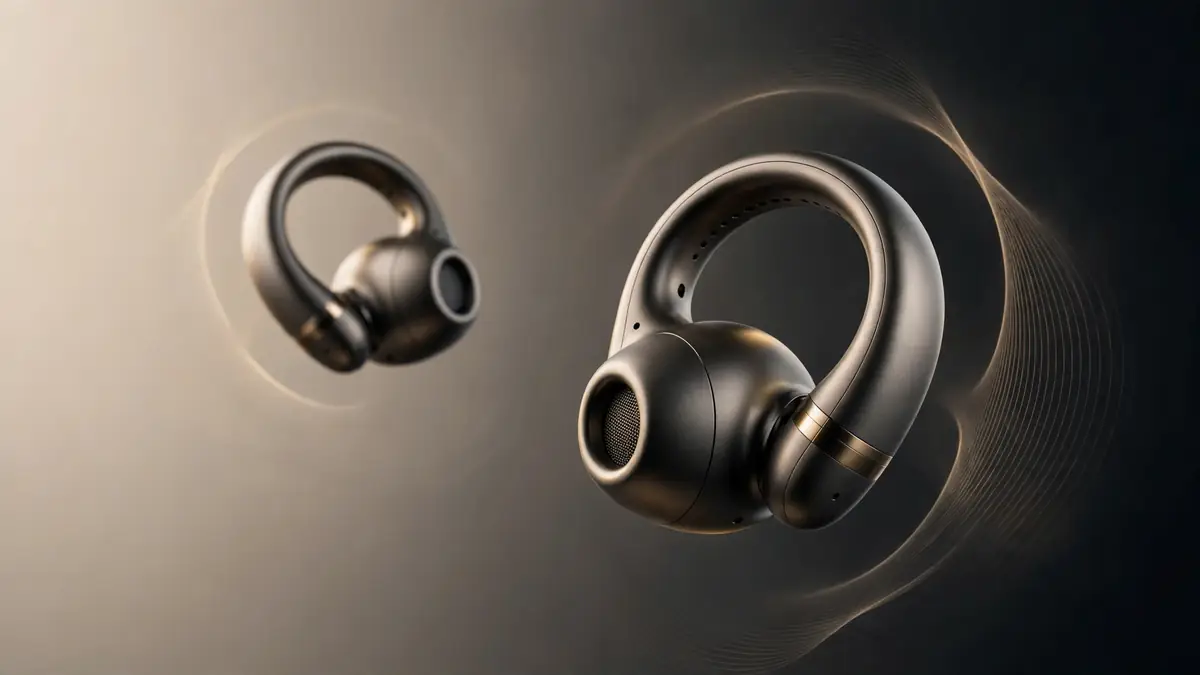
The second generation keeps the sculpted cuff-shaped design Bose pioneered but addresses the original's most common criticisms. Bose promises improved, more immersive audio with more bass and considerably more volume — a direct response to the original's quiet output, which reviewers frequently flagged as the format's Achilles' heel. Battery life extends to a claimed 9 hours per charge, call quality is improved, and the charging case gains wireless charging with a refined metallic design. Automatic volume management adjusts output to the surrounding environment, and a new Cinema Mode joins the feature set alongside updated connectivity.
The engineering challenge here deserves respect. An unobstructed ear creates fundamentally different acoustic conditions than a sealed ear canal — bass dissipates, ambient noise competes, and there is no isolation to hide behind. Bose's OpenAudio technology directs sound through the air near the ear rather than using bone conduction, and every improvement in the second generation is about making the format's compromises less consequential: more driver output for volume, smarter processing for clarity, longer battery for all-day wear.
The Sport sibling: open-ear audio for workouts
The $199 Bose Sport Open Earbuds extend the same philosophy toward exercise. They use a slimmer C-arm cuff with soft silicone, a grippier finish and textured physical buttons designed to stay easy to press mid-workout. The pitch is straightforward: runners and athletes who value hearing traffic over hearing sub-bass extension. The $100 gap between the models buys the Ultra's richer media features and Bose's claims of improved sound, versus the Sport's tighter fit and workout-ready controls.
This split is strategically smart. The original Ultra Open tried to serve commuters and marathoners with one design; the two-model lineup acknowledges that all-day comfort and workout security are different engineering problems. For runners specifically, open-ear earbuds solve a real safety problem — hearing a car approaching matters more than hearing the final degrees of bass extension — without the fit compromises of bone-conduction alternatives.
The ANC question: a feature, not a missing feature
Neither model includes active noise cancellation, and that is deliberate. The open-ear design exists to preserve awareness of surrounding sounds — traffic, announcements, conversation — so adding ANC would contradict the product's reason for being. Buyers must understand this trade-off clearly: these earbuds will never isolate you on a plane or a noisy train the way Bose's own QuietComfort line does. Independent testing of the original Ultra Open measured modest overall sound quality scores typical of the open-ear format generally, not a flaw unique to Bose. The second generation's improved drivers should narrow the gap, but physics sets a ceiling that no amount of tuning fully removes.
Design and colours
Both models come in Black and White Smoke. The Sport adds a limited-edition Eucalyptus Green, while the Ultra 2nd Gen gets three limited finishes: Cherry Chocolate, Olive Green and Sky Pink. The cuff form factor remains the defining visual signature — these are earbuds designed to be seen, almost jewellery-like, which is part of their appeal for all-day wearers who want technology that looks intentional rather than clinical.
Bose's own framing is worth quoting. Raza Haider, president of Bose Premium Consumer Audio, said at the launch: "With the original Ultra Open Earbuds, Bose introduced a new way to experience your music without tuning out the world. That meant creating something people could comfortably wear all day, so music could simply be part of life as it happens. Now, we're building on that foundation, bringing the same focus on comfort and design into sport while making our flagship experience even better."
Considerations and open questions
The honest caveats are significant. First, independent testing has not yet verified Bose's claims about improved volume, bass, calls and battery life — the real story of this launch will be written by reviewers with measurement rigs. Second, buyers should compare the $299 Ultra 2nd Gen against discounted first-generation stock and increasingly competitive alternatives from brands like Shokz and Nothing, which have been aggressive on price. Third, the open-ear format remains a compromise by design: if your primary listening happens in noisy environments, conventional sealed earbuds will sound better for less money. Finally, long-term comfort of the cuff design over full workdays is personal and can only be judged by wearing them.
Based on Bose's announcement and launch coverage, the Ultra Open Earbuds (2nd Gen) look like the right second-generation product: they keep the distinctive design and fix the specific weaknesses — volume, bass, battery, charging — that held the original back, while the $199 Sport model gives athletes a purpose-built alternative. The category logic is sound: personal audio is becoming less about one perfect pair of earbuds and more about choosing your relationship with the surrounding world. For commuters, runners, cyclists and office workers who prioritise awareness, the second generation deserves a place on the shortlist — pending independent verification of Bose's audio claims. For everyone else, the absence of noise cancellation remains a hard line.
Sources