$84 billion — and nearly triple last year
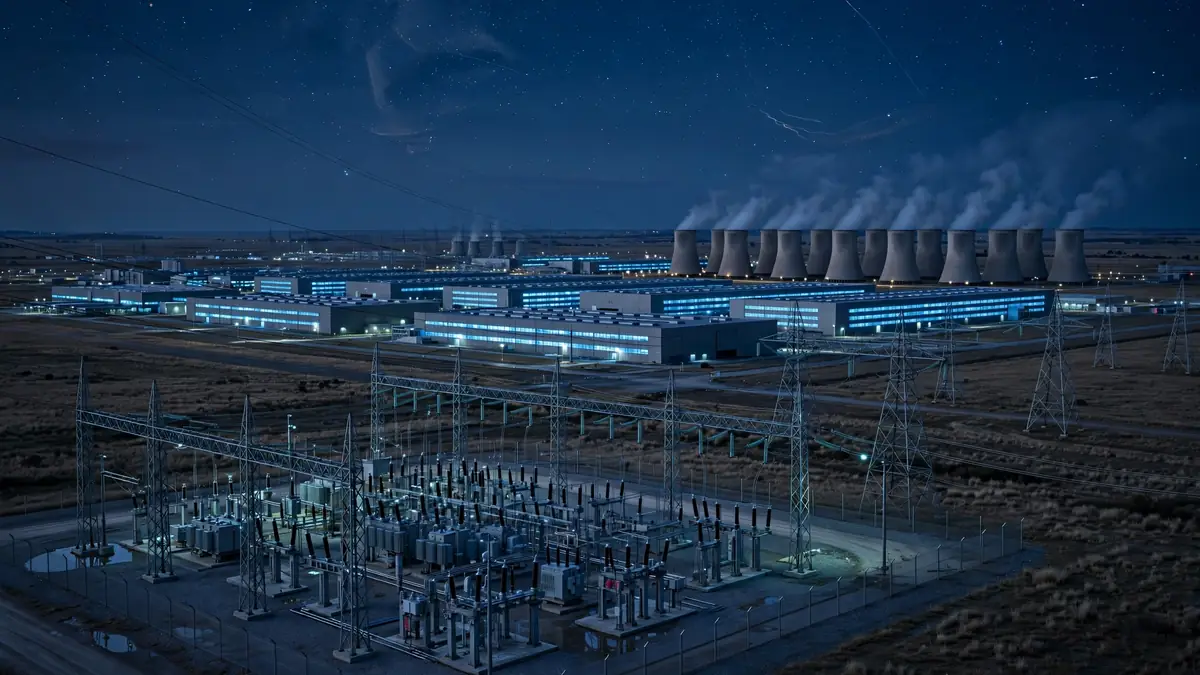
While much of commercial real estate spent 2026 treading water, one asset class went vertical. According to ConstructConnect's September 2026 Data Center Report, US data centre construction starts reached $84.1 billion through July 2026 — nearly tripling the spending level from the same period last year. Data centres now represent nearly one-quarter of all nonresidential building construction in the United States, a share that would have been unthinkable five years ago.
The pace is still accelerating. July 2026 alone added $2.7 billion across 23 new project starts, bringing the year-to-date count to 136 projects. The largest project initiated in July was CyrusOne's $1.5 billion data centre campus in Texas, pushing the state's total starts to $9.9 billion for the year. North Carolina led the South region with more than $10.4 billion in year-to-date starts, while Indiana, Illinois and Michigan each crossed the $10 billion mark. Ohio, Wisconsin, Arkansas and Georgia recorded multiple billions in cumulative starts. And the pipeline is far from exhausted: ConstructConnect is tracking another 85 preconstruction projects valued at $78.7 billion scheduled to start before the end of 2026, with the South accounting for 71 percent of planned spending.
The driver is no secret: artificial intelligence. Hyperscale AI workloads are devouring compute capacity faster than developers can deliver it, and the financial architecture of real estate has permanently shifted to prioritise power consumption over square footage.
Costs are exploding faster than floor space
The report's most striking finding is that data centres are getting more expensive much faster than they are getting bigger. For year-to-date projects with known pricing and dimensions, the average project cost $1.06 billion and spanned 701,000 square feet. A year earlier, the average project cost $352.8 million across 454,400 square feet. Average construction costs hit $818.20 per square foot — a 57 percent surge over 2025 levels.
Cushman & Wakefield's 2026 Data Center Development Cost Guide, released in early September, puts the global picture in perspective. The worldwide data centre development pipeline now represents approximately $2.3 trillion in investment capital — $492 billion under construction and $1.8 trillion in planned and precommitted projects. That figure exceeds the estimated total market value of all New York City real estate by roughly $640 billion.
All-in greenfield development costs in the United States and Canada average $17.6 million per megawatt for the most modern facilities — and that excludes the chips and GPUs, which are the most expensive part of all. Power infrastructure is now the single largest cost category, representing an average of 21 percent of total greenfield development costs, with contingencies ranking second, reflecting long material lead times, labour shortages and a shifting regulatory environment. JLL's 2026 Global Data Center Outlook reports average construction costs grew from $7.7 million per megawatt in 2020 to $10.7 million in 2025, and forecasts $11.3 million for 2026 — with AI tenant fit-out able to cost as much as $25 million per megawatt on top.
The building boom has outgrown the office market
The US Census Bureau's monthly construction spending survey now tracks data centres as their own category, and the numbers have climbed with remarkable speed. In April 2026, data centre construction ran at a seasonally adjusted annual rate of $50.7 billion, up 27 percent from $39.8 billion a year earlier — enough, according to Data Center Knowledge, to pass general office construction for the first time. By July 2026, the annual pace was above $75 billion, per Axios — nearly 60 percent higher than a year earlier.
That symbolic crossover matters. For decades, the office tower was the defining asset of commercial real estate. In 2026, the defining asset is the windowless warehouse of servers. It is worth remembering what the Census figure actually covers: the building itself — site work, structure, power and cooling systems — not the servers and chips inside. Axios notes construction is roughly 20 percent of total data centre costs, meaning the true investment flowing into digital infrastructure is several multiples of the headline construction number.
JLL estimates $3 trillion in global investment will be needed by 2030, with global data centre capacity expected to roughly double from about 103 gigawatts in 2025 to about 200 gigawatts by 2030.
Power is the new location, location, location
The binding constraint on the boom is not capital — it is electricity. Seyfarth Shaw's September 2026 Real Estate Market Pulse notes that power availability and utility capacity are increasingly determining where new development can occur. Investors must now secure independent grid access and structure yield profiles around server capacity rather than traditional leasing models.
The geography of the boom reflects this. Development is concentrating away from coastal land-constrained markets toward places with available land, accessible power and accommodating regulators. Cushman & Wakefield projects frontier markets will see capital expenditure grow 6.9-fold from current levels to $631 billion. Texas ranks among the lowest-cost development environments thanks to its regulatory climate, lower construction labour costs and mature contractor ecosystem — which helps explain CyrusOne's $1.5 billion bet there.
Powered land values tell the story: in primary US markets, powered land is fetching an average of $584,000 per megawatt in 2026 year-to-date — 35 percent above its five-year average and 51 percent higher than a year earlier. Skilled labour shortages in the mechanical, electrical and plumbing trades compound the pressure, driving average annual wage growth of 5 percent from 2021 to 2024, with steeper increases in secondary and tertiary markets. Not every market is accelerating: Seyfarth notes a pause in Charlotte's data centre development pipeline, a reminder that local grid and policy constraints can stop even the hottest trend.
Why investors are all-in — and what could go wrong
For institutional capital, data centres offer something scarce in 2026: a structural growth story with contracted demand. AI investment is boosting demand in technology-focused markets — Boston and San Francisco are seeing technology investment support data centre, multifamily and even office activity, according to Seyfarth. The asset class has become the most capital-intensive in commercial real estate, and deal trackers show data centre transactions running neck-and-neck with residential by deal count.
The risks are real, though. Power is finite and politically contested — communities are already pushing back on the water and electricity demands of hyperscale campuses. Construction costs are rising faster than rents in some markets. And the tenant base is concentrated: a handful of hyperscalers and AI labs underwrite much of the demand. If AI capital expenditure ever pauses, the most speculative projects — those built on hoped-for power and hoped-for tenants — would feel it first.
Still, the direction of travel is unmistakable. The property conversation has moved off the traditional single-family home and onto compute: search interest in "data centers" is up nearly 400 percent, and "colocated data center" ranks among the fastest-growing real estate search trends of 2026. In a year when mortgage rates topped 7.5 percent and office landlords were converting towers into apartments, the data centre became the one corner of real estate where the cranes never stopped.
Sources