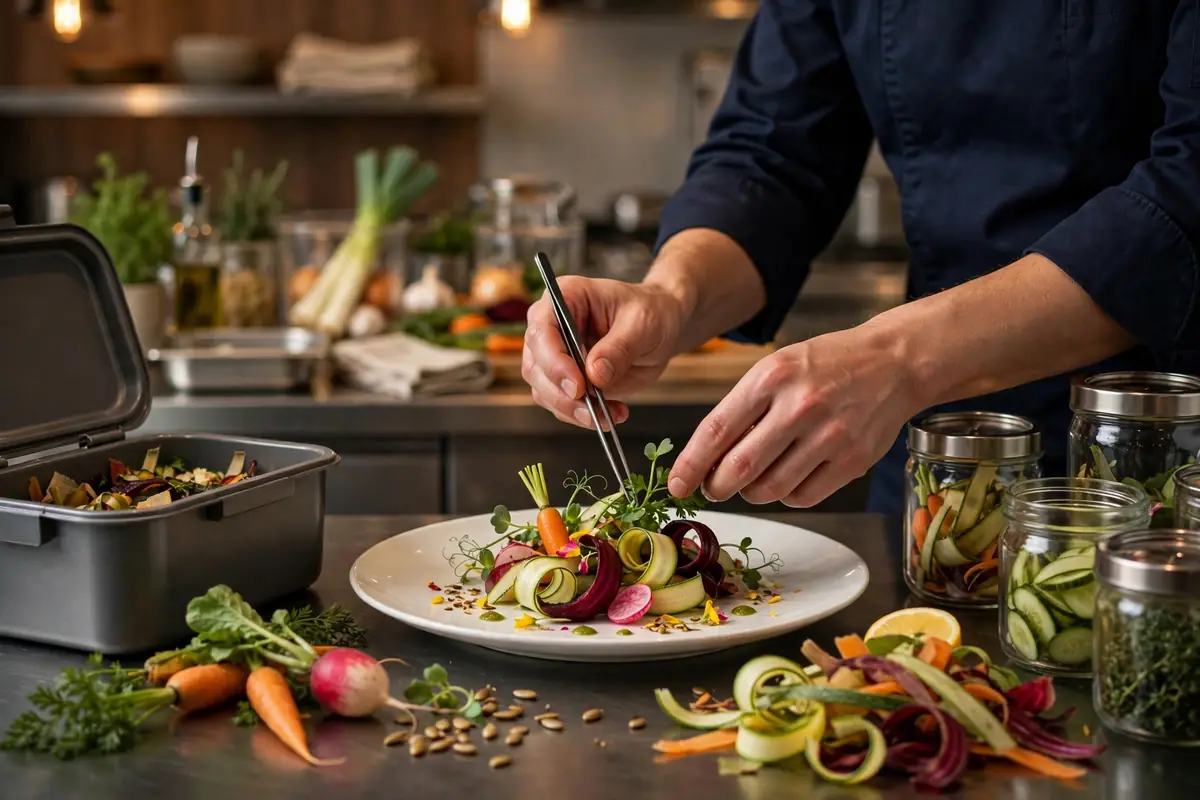
This week, some of New York’s most celebrated kitchens are doing something radical: throwing almost nothing away. From September 28 to October 4, 2026, the city hosts the third annual Make Food Not Waste Restaurant Week, an event that brings together Michelin-recognized chefs, James Beard Award winners, North America’s 50 Best honorees and beloved neighbourhood staples around a single mission — creative, no-waste cooking.
Organised by Mill, the company behind the food-recycling kitchen bin, the week asks every participating team to commit to zero waste in the kitchen. It is a striking proposition: in an industry where perfection has traditionally meant pristine ingredients and anything less-than-perfect quietly binned, some of the country’s most talked-about culinary voices are now competing on who can do the most with what would once have been discarded.
The 2026 edition, announced September 24, welcomes a slate of newcomers — including Chambers, Cynthia, Somssi and Oberon — alongside returning favourites such as Bangkok Supper Club, Corima and Raf’s. For the first time, chefs will showcase their zero-waste approach across four distinct formats: a single featured dish, a curated three-course menu, an exclusive cocktail, or an artfully paired dish and drink. The week also debuts three new ways for guests to participate, extending the experience beyond the dining room.
The formats matter because they meet diners where they are. Not everyone will book a three-course zero-waste tasting menu; far more people will order a single dish or a cocktail out of curiosity. A carrot-top pesto, a cocktail built on repurposed citrus husks, a dessert from yesterday’s bread — these are entry points, and the week is designed to make the philosophy taste good first and preach second.
From local movement to national moment
Mill launched Make Food Not Waste Restaurant Week in fall 2024 as a New York affair. What began as a local movement has, in two years, captured the industry’s attention and expanded nationally — including a pop-up dinner series in Los Angeles earlier this year. That trajectory mirrors a wider shift in how the restaurant business talks about waste: from back-of-house operational headache to front-of-house selling point.
The timing is instructive. The restaurant industry in 2026 is under severe margin pressure — in Canada, 41% of restaurant companies are operating at a loss or just breaking even, and US operators name food costs as their top challenge. In that context, zero-waste cooking is not just an ethical stance; it is an economic one. Every gram of ingredient that becomes a dish instead of rubbish is margin recovered. Sustainability, as operators are discovering, can be a cost discipline disguised as a virtue.
Why diners are ready for it
The demand side has been building for years. Among restaurant owners surveyed by Toast, “local and sustainable sourcing” was cited as the top trend expected to influence menus in 2026. Younger diners in particular want food with a story: hyper-local sourcing, menus that name farms and suppliers, and practices that visibly reduce waste all resonate with guests who increasingly treat dining choices as ethical choices.
There is also a deeper cultural current. Food waste has moved from an abstract environmental statistic to something people encounter daily — in their own bins, their grocery bills, their guilt. A restaurant that openly designs waste out of its kitchen offers diners something increasingly rare: a meal that feels good in more than one sense. As Mill’s organisers put it, the week aims to change how people think about food and their routines, both in professional kitchens and at home.
The craft of cooking with “nothing”
Zero-waste cooking, done well, is one of the most technically demanding styles in the modern kitchen. It requires rethinking the ingredient from the ground up: the whole fish rather than the fillet, the whole vegetable rather than the trimmed portion, the whey from cheese-making, the spent grain from brewing. Scraps become stocks, pickles, powders, crisps and garnishes. Menus become more seasonal by necessity, because using everything means cooking with what is actually available.
For the chefs involved, the constraint is the point. Fine dining has always thrived on limitations — the tasting menu, the single-origin ingredient, the seven-seat counter. Zero waste adds a new one, and constraints are where creativity lives. The dishes emerging from this year’s week will be watched closely, not least because what happens on these menus has a habit of filtering down: today’s tasting-menu technique is tomorrow’s neighbourhood bistro special.
What home cooks can take from it
You do not need a Michelin star to cook the zero-waste way. The principles translate directly to a home kitchen:
- Stock from scraps. Onion skins, carrot peels, herb stems and mushroom stalks make excellent stock. Keep a bag in the freezer and top it up through the week.
- Love the whole vegetable. Broccoli stalks, cauliflower leaves and beet greens are all edible and often delicious — roasted, pickled or blitzed into pesto.
- Plan around what’s wilting. A weekly “use it up” meal — a frittata, a stir-fry, a soup — turns the sadder end of the vegetable drawer into dinner.
- Rethink stale bread. Panzanella, ribollita, breadcrumbs and bread pudding exist precisely because cooks refused to waste a loaf.
- Compost the rest. What cannot be eaten can still avoid landfill; many cities now offer curbside food-scrap collection.
A week that points somewhere
Restaurant weeks come and go, and a cynic might file this one under marketing. But Make Food Not Waste is interesting precisely because its premise — that the best cooking uses everything — is also the oldest idea in food. Peasant cuisines the world over were zero-waste by necessity; nose-to-tail and root-to-stem are just old wisdom with new branding.
What is new is the stage. When the chefs with the most cultural capital in American dining choose to compete on waste rather than luxury ingredients, it signals where the industry’s prestige is heading. The luxury of 2026, this week suggests, is not the rarest thing on the plate — it is the intelligence with which nothing is wasted. That is a trend worth watching, one dish at a time.
Sources