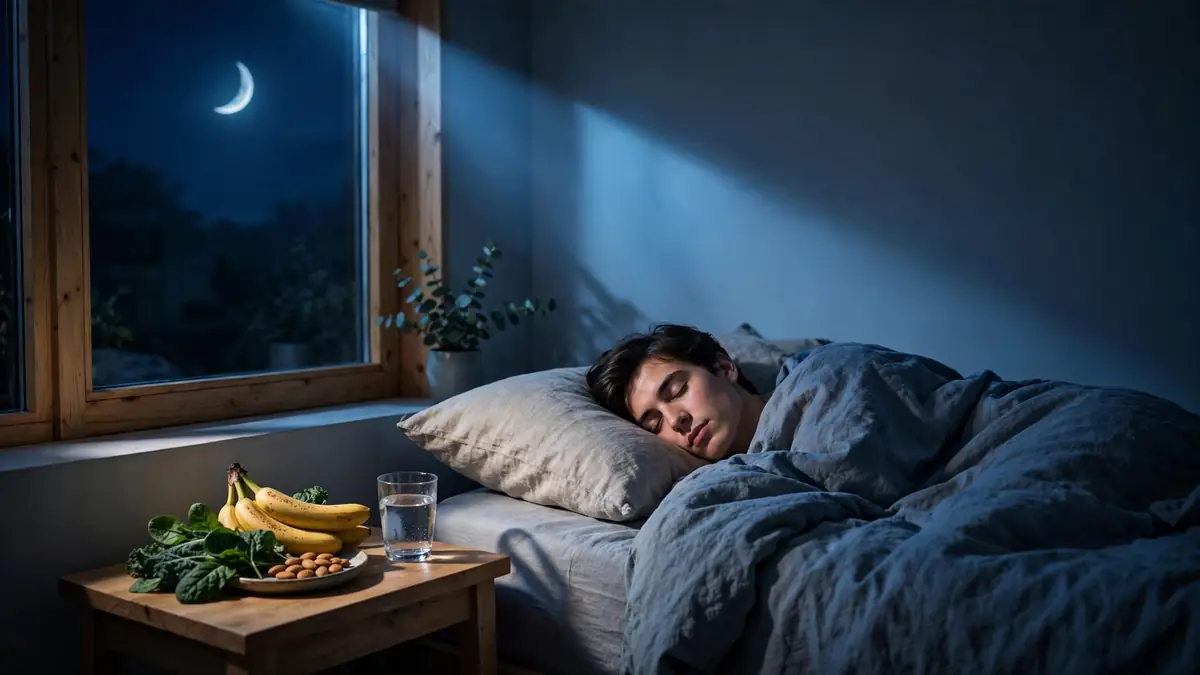
First it was skin cycling and cortisol cocktails. Now the wellness internet has a new obsession: squeezing every possible drop of rest out of the night. "Sleep maxxing" — the practice of optimizing sleep through routines, gadgets and supplements — is one of the fastest-growing search trends of September 2026, and at the center of it sits an unlikely mineral: magnesium.
According to trend data from Rising Trends, searches for "magnesium versus melatonin for sleep" are up 233 percent year over year, while "sleep maxxing" itself is up 164 percent. The numbers are still small in absolute terms — around 1,300 and 1,900 monthly searches respectively — but the direction is unmistakable. People are questioning the old default sleep aid and looking for alternatives.
What "sleep maxxing" actually means
The term is classic internet maximalism applied to rest: mouth tape, blue-light glasses, sleep trackers, weighted blankets, white noise machines, magnesium drinks, precisely timed caffeine cutoffs and elaborate wind-down rituals. Some of it is evidence-informed; some of it is theater. But the underlying impulse is real — a recognition that sleep is not a luxury but a pillar of health, alongside diet and exercise.
September's search data shows the trend spreading beyond supplements. "Side sleeper" searches surged 817 percent to 49,500 a month, "smart sleep tech" is up seventeenfold, and "seasonal depression" entered the rankings as autumn approaches in the northern hemisphere — a reminder that the annual light shift reliably disrupts sleep and mood.
The magnesium moment
The most commercially visible edge of the trend is magnesium. On September 28, the New York Post reported on a $19 magnesium glycinate supplement being dubbed "Nature's Ambien" by enthusiastic reviewers, with one former prescription sleep-aid user saying she had finally managed full nights of sleep without her old medication.
There is some research behind the enthusiasm. A European clinical trial examining magnesium supplementation's effects on sleep quality, mood and activity levels concluded that the mineral "may be an effective nonpharmacological intervention to promote sleep and mood," according to the Post's reporting. Magnesium plays a role in the body's production of melatonin, the hormone that regulates circadian rhythm, which gives the mineral at least a plausible biological pathway to better sleep.
Industry data suggests consumers are already voting with their wallets. A September 2026 benchmark report noted that mineral-based sleep formulations grew 17 percent in 2025 — more than three times faster than conventional melatonin supplements, which grew 5 percent, with melatonin sales approaching $800 million in 2025 but flattening. The global sleep supplements market stood at $8.74 billion in 2025 and is projected to reach $17.96 billion by 2035, according to DataM Intelligence figures cited in the report. Separately, public health experts cited by the Daily Mail estimate that around 60 percent of American adults do not get enough magnesium from diet alone.
"Consumers are moving decisively away from synthetic hormones toward restorative mineral physiology," said James Whitmore, founder and chief analyst at Sutton Hills Research Partners, the firm behind the benchmark report. He cautioned, however, that persistent sleep problems need proper evaluation rather than "isolated retail supplementation" — a useful corrective to the hype.
Magnesium vs. melatonin: what to know
Melatonin is a hormone the brain produces in response to darkness; supplementing it essentially tells the body it is nighttime. It has reasonable evidence for specific uses — jet lag, shift-work sleep disruption, delayed sleep phase — but the evidence for general, nightly, long-term use in otherwise healthy adults is thinner, and questions remain about optimal dosing and long-term effects, particularly in children and teenagers.
Magnesium, by contrast, is an essential mineral involved in hundreds of bodily processes, including muscle relaxation and nervous system regulation. The forms most discussed for sleep are magnesium glycinate and magnesium threonate, marketed for their absorption profiles. The evidence base for magnesium as a sleep aid is promising but still developing — mostly small trials, often in people with documented deficiencies or older adults. It is not a sedative, and it will not knock out someone whose real problem is an 11 p.m. espresso habit or a glowing phone on the pillow.
Neither supplement should be treated as risk-free. Magnesium can interact with certain medications, including some antibiotics and blood pressure drugs, and excessive doses cause digestive distress. Melatonin can interact with blood thinners, immunosuppressants and diabetes medications, among others. Anyone considering a nightly supplement — especially people who are pregnant, nursing, taking prescription medication or managing a chronic condition — should talk to a clinician or pharmacist first. Supplements are also less tightly regulated than prescription drugs in many countries, so product quality varies.
What sleep science actually recommends
Here is the part of sleep maxxing that sleep researchers will happily endorse: the free, unglamorous fundamentals. They outperform any supplement in the evidence hierarchy, and they cost nothing.
- Keep a consistent schedule. Going to bed and waking at the same times — including weekends — is the single most powerful lever for circadian rhythm.
- Get morning light. Daylight exposure early in the day anchors the body clock; dim the lights in the evening.
- Cut caffeine by early afternoon. Caffeine's half-life is around five to six hours, so a 4 p.m. coffee is still substantially active at bedtime.
- Make the bedroom cool, dark and quiet. The body needs to drop its core temperature to initiate sleep.
- Put the phone away. Screens deliver both stimulating light and stimulating content; neither belongs in the wind-down hour.
- Exercise regularly — but not right before bed. Daytime activity improves sleep quality for most people.
For persistent insomnia, the first-line treatment recommended by sleep medicine guidelines is cognitive behavioral therapy for insomnia (CBT-I) — a structured program that addresses the thoughts and behaviors perpetuating sleeplessness — not a supplement. CBT-I programs are increasingly available through apps and telehealth, and the evidence for them is stronger than for any over-the-counter sleep aid.
The verdict on the trend
Sleep maxxing, stripped of its sillier extremes, is a healthy cultural shift: it treats sleep as something worth investing in rather than something to steal from. The magnesium-versus-melatonin debate reflects a genuine and reasonable question many people are asking — and the honest answer is that neither is magic, both deserve a conversation with a professional, and the biggest gains still come from the boring basics.
If the trend gets millions of people to take their sleep seriously, keep regular hours and see a doctor about real sleep disorders instead of self-medicating indefinitely, it will have done genuine good. If it just sells more gummies, it will have done what wellness trends usually do. The difference, as with most health trends, is in what people do after the hype fades.
Sources