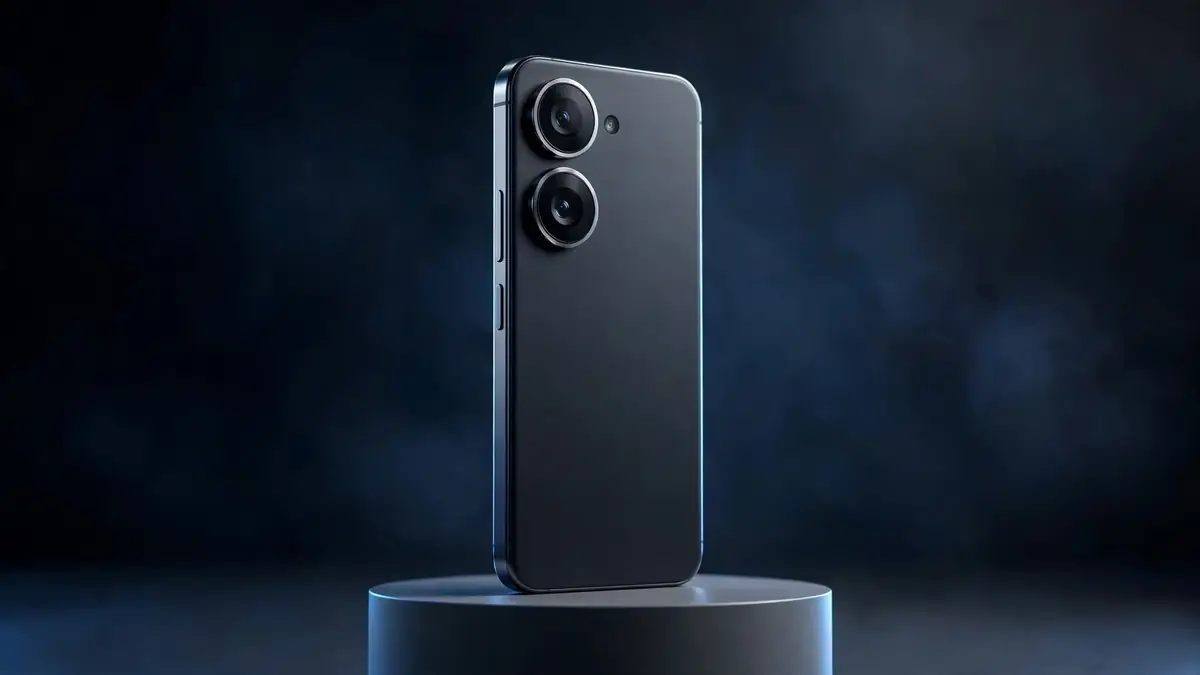
Honor has officially launched its Magic 9 series in China, and the timing could hardly be more pointed. The new flagship line — headlined by the Magic 9 Pro Max with Qualcomm's latest Snapdragon 8 Elite Extreme Gen 6 silicon and a pair of 200-megapixel cameras — arrives in the same fortnight that almost every other Chinese flagship maker has raised prices to cover soaring memory costs. Honor, by contrast, is holding the line: the Magic 9 starts at 4,499 yuan (about $671), making it one of the most restrained entries in this year's flagship cycle.
The headline act: Snapdragon 8 Elite Extreme Gen 6
Every Magic 9 model runs on Qualcomm's new top-end silicon, with the Magic 9 Pro Max carrying the full Snapdragon 8 Elite Extreme Gen 6. According to an AnTuTu V12 benchmark listing that surfaced just before launch, the chip pairs two Oryon Prime cores clocked at up to 5.07GHz with three performance cores at 4.03GHz and three more performance cores at 3.74GHz. The tested configuration ran 16GB of LPDDR5X RAM with 1TB of UFS 4.1 storage on Android 17.
The numbers are striking. The Honor Magic 9 Pro Max recorded an overall AnTuTu V12 score of 5,524,187 points, with the CPU contributing 1,452,764, the GPU 2,081,549, and the memory and UX tests returning 736,389 and 1,253,485 points respectively. That puts it ahead of the OnePlus 16, which previously logged 5,384,433 points on the same benchmark in a 16GB+1TB configuration.
Honor describes the chip as built on a 2-nanometre-class process with CPU clocks reaching 5GHz. A separate Geekbench listing for a pre-production unit showed 3,448 points single-core and 9,353 multi-core on Geekbench 6 — numbers worth treating cautiously, since early software rarely matches shipping performance. Still, taken together, the listings confirm that the 2026 flagship race is being run at clock speeds that would have seemed absurd just two generations ago.
Two 200MP cameras and a cinematic bet
The camera system is where Honor is placing its biggest differentiating bet. The Magic 9 Pro Max pairs a 23mm-equivalent 200-megapixel main camera — built on a large 1/1.28-inch sensor with an f/1.6 aperture — with an 85mm-equivalent 200-megapixel 1/1.4-inch periscope telephoto offering 3.7x optical zoom, plus a 50-megapixel ultrawide. According to Honor, both the main and periscope units benefit from CIPA 8.0 gimbal-level image stabilization.
The more unusual story is the ARRI partnership. The German cinema camera maker — the company behind the cameras used on most major film productions — is lending the Magic 9 series its ARRI color profiles, cinematic video filters, the ARRI LogC3 curve and Wide Gamut 3 recording. Honor has also folded in what it calls ARRI Movie Mode and ARRI Look, aiming to give phone-shot footage a more deliberately cinematic character straight out of the camera.
For photographers who want to go further, Honor is selling an optional 500mm teleconverter lens attachment with a SmallRig camera cage, to which accessories such as an LED flash, a grip and a microphone can be mounted. It is an aggressive play for the enthusiast niche that other phone makers have mostly courted with software alone.
The standard Magic 9 is no slouch either: a 200-megapixel 1/1.4-inch f/1.9 main camera with CIPA 7.5 stabilization, a 200-megapixel 1/1.56-inch periscope and a 50-megapixel ultrawide, plus support for the smaller G200 teleconverter. Both models carry Honor's self-developed Honor Light H1 imaging chip, which handles image processing alongside the Snapdragon.
Android's first square selfie camera
Perhaps the oddest detail of the whole launch is the front camera. Both Magic 9 models ship with a 55-megapixel square-format selfie camera — a 1:1 sensor format that Apple introduced on the iPhone 17 series. It is the first square selfie camera on an Android phone, and it is clearly aimed at users who live in portrait crops and social apps. Whether the square sensor proves genuinely useful or a novelty will depend on how third-party apps handle it, but it is exactly the kind of experiment the flagship market needs more of.
A display built to be abused
The Pro Max's 6.8-inch OLED — which Honor calls its Black Diamond display — is specced aggressively: a peak brightness of 10,000 nits, a refresh rate that drops from 1Hz to 120Hz for power savings, and 4320Hz PWM dimming, which should reduce eye strain at low brightness compared with cheaper panels.
Honor also claims the panel uses a 5,600-layer silicon nitride coating that makes it 15 times more scratch-resistant and 25 times more drop-resistant than its comparison baseline. Independent reviewers will need to verify that, but the ambition is notable: screen durability has been the quiet flagship weakness for years. The body is all metal and carries IP68, IP69 and IP69K ratings — the last of those meaning it can withstand high-pressure, high-temperature water jets.
Battery: silicon-carbon goes mainstream
Keeping the Pro Max running is an 8,600mAh battery — enormous by flagship standards. Honor says the cell uses a 40% silicon-content anode with an energy density of 1000Wh/L, which is how the company is fitting that much capacity into a phone that still has to feel like a phone. Charging runs at 100W wired and 80W wireless, with 50W wireless car charging supported by compatible vehicles.
This is the payoff of the silicon-carbon battery transition that began in 2024: capacity is climbing while phones are not getting meaningfully thicker. For buyers in the US, UK and Australia, where the previous generation's 7,000mAh-class batteries already ended the nightly-charge anxiety, an 8,600mAh cell points toward genuine two-day flagship endurance.
The price story is the real story
Strip away the cameras and silicon, and the Magic 9 launch is really about pricing discipline. In late September 2026, Chinese flagship makers collectively raised prices as memory costs exploded: contract prices for the mainstream 8GB+256GB configuration have risen nearly 200% year-over-year, and memory's share of a phone's bill of materials has jumped from 10–15% to 30–40%.
- The vivo X500 and OPPO Find X10 both start at 5,499 yuan (about $820), up 1,100 yuan from their predecessors.
- The Xiaomi 18 Pro starts at 5,999 yuan (about $895), up 1,000 yuan from the prior generation.
- Some standard models have crossed the 5,000-yuan threshold for the first time.
Honor, by contrast, launched the Magic 9 series at a starting price of 4,499 yuan (about $671). CEO Li Jian said the company aims to avoid passing all cost pressure onto consumers, according to launch coverage. The strategy appears to be working: Magic 9 series online sales in the first 30 minutes rose 194% year-over-year, ranking first among Android flagship launches above 4,000 yuan in September.
That restraint matters because Honor needs it. The company's market share narrowed to 11.3% in the second quarter of 2026, slipping to sixth place. A value-flagship play against pricier rivals is Honor's most credible route back up the table — and for international buyers, it sets an interesting marker for what the global Magic 9 pricing might look like when it eventually leaves China.
Configurations and pricing
The Honor Magic 9 Pro Max comes in four storage options, matching what Honor listed when pre-orders opened: 12GB+256GB at 6,499 yuan (about $968), 12GB+512GB at 6,999 yuan (about $1,043), 16GB+512GB at 7,499 yuan (about $1,117), and 16GB+1TB at 8,499 yuan (about $1,266), plus a Master Photographer Package at 10,999 yuan (about $1,639). Colors are Moss Green, Silver and Shadow Black, with the standard Magic 9 also offered in Black, Silver, Olive Green and a Popcorn Yellow finish. The G500 and G200 teleconverters and the SmallRig video expansion kit are sold separately.
What it means for the rest of 2026
Three things stand out. First, the Snapdragon 8 Elite Extreme Gen 6 era has begun in earnest, with Xiaomi, Honor, OnePlus and iQOO all now fielding devices on the new platform — expect every late-2026 flagship review to be a chip-to-chip comparison. Second, the ARRI partnership signals that camera differentiation is moving from sensors to cinematic craft, which plays well for the YouTube-and-Reels generation. Third, and most importantly for buyers, memory prices are the tax every 2026 flagship pays — Honor is simply choosing to absorb more of it than its rivals. If that discipline survives the international launch, the Magic 9 could be the value flagship of the season.
Sources