What happened
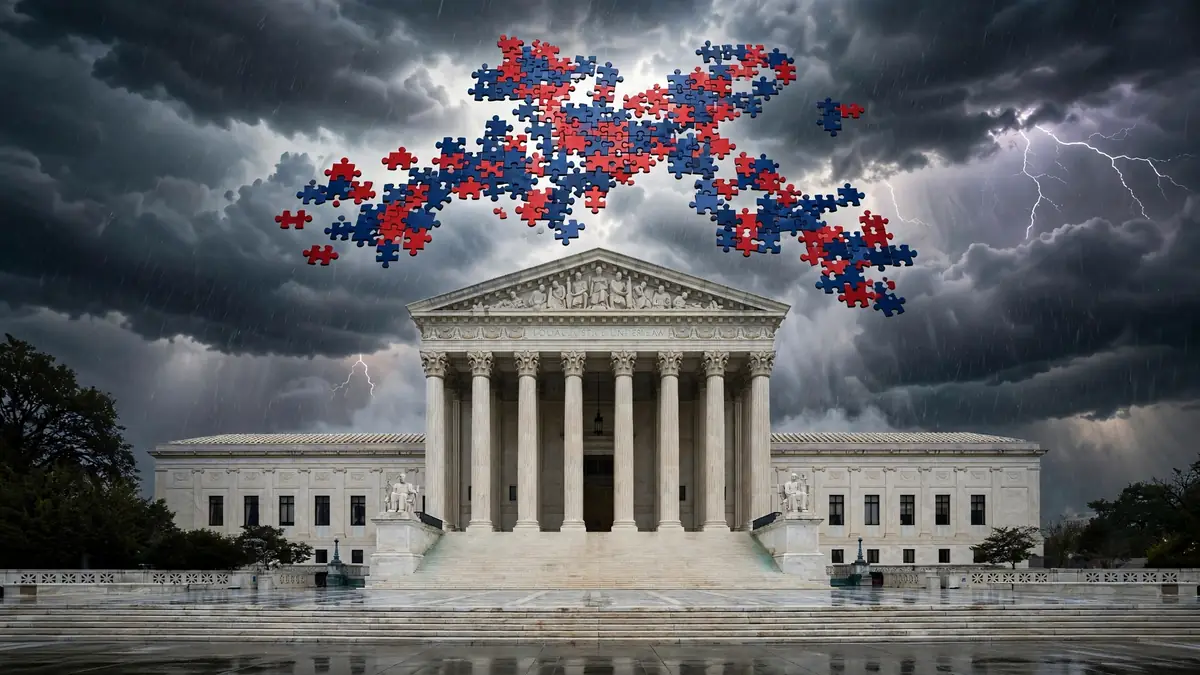
On Friday, September 25, 2026, the US Supreme Court rejected — for the third time in as many weeks — an effort to use a Republican-backed congressional map in Missouri for November's midterm elections. The justices' unsigned order, with no noted dissents, sided with opponents of the proposed 2025 districts and effectively ended a whirlwind legal saga that had bounced through state and federal courts for much of September.
The practical result: Missouri will vote in November under the same congressional map it used in the 2022 and 2024 elections. "Ballots using the 2022 map have been printed and mailed. Absentee voting has already begun, as has military and overseas voting," the court wrote. "At this late date, ordering reversion to the 2025 map in the midst of an ongoing election would usher in electoral chaos."
The decision was a loss for Republicans and for President Donald Trump, who had urged Missouri to redraw its congressional maps as part of an unusual mid-decade redistricting push designed to help the GOP retain control of the House. Republican Governor Mike Kehoe said Missouri would follow the order, though he voiced frustration: "It is disappointing that today's decision by the United States Supreme Court means Missouri will conduct its November general election under a different congressional map than its primary election. Voters deserved consistency and certainty, and not for the rules to be changed between elections."
Why it matters
The dispute concerned only a single House seat — but in a narrowly divided House of Representatives, a single seat can decide which party holds the gavel. Missouri's current delegation consists of six Republicans and two Democrats. The 2025 map was designed to make the Kansas City-based 5th Congressional District — held by longtime Democratic Representative Emanuel Cleaver — substantially more favorable to Republicans, potentially producing a 7-1 GOP advantage in the state's delegation.
Cleaver, jubilant after the ruling, put the stakes plainly: "I think my reelection prospects shot up significantly."
The case matters beyond Missouri because it is one front in a nationwide mid-decade redistricting war. In a typical decade, congressional lines are redrawn once, after the census. But ahead of these midterms, both parties have pursued extraordinary redraws in states they control, each trying to tilt the national House map by a seat here and a seat there. Missouri became the most legally tortured example — and the Supreme Court's three interventions in a single month show just how far the fight has escalated.
The ruling also underscored a growing tension between the lower courts and the Supreme Court's emergency docket. The decisions arrived without full briefing or oral argument, in unsigned orders — the kind of fast, unexplained intervention that has become the Court's signature in election disputes.
The backstory: a month of legal whiplash
The saga began with a push from the top. President Trump encouraged Missouri Republicans to redraw the state's congressional boundaries ahead of the 2026 elections. Governor Kehoe called lawmakers into a special session, and the Republican-controlled legislature approved the new boundaries — which targeted Cleaver's district — in September 2025.
The map was actually used in Missouri's August 2026 primaries. But it quickly ran into opposition. The Missouri Supreme Court ruled earlier in September that a citizen petition prevents the new map from being used unless voters first approve it in a November referendum — a matter of state law that the US Supreme Court's unsigned opinion leaned on heavily: "As a matter of state law, the 2022 map — not the 2025 map — must be used in the 2026 congressional election."
Meanwhile, the federal courts saw it differently. A panel of the 8th US Circuit Court of Appeals ruled that switching districts between the primary and general elections would violate the US Constitution, and directed a district judge to bar Missouri from using anything other than the new map — delaying the order's effect to allow an appeal to the Supreme Court. The Supreme Court then blocked that ruling, halted the federal appeals court's revival of the GOP-friendly map, and ordered the lower courts not to "enjoin or otherwise prohibit the use of the 2022 map in the 2026 congressional election."
It was the third time the nation's highest court had intervened against efforts to use the newer map — a remarkable frequency that reflects both the stakes and the procedural mess of trying to change election rules while voting is already underway.
What happens next
For November's election, the map question is settled: the 2022 districts stand. But the underlying fight is not over. The citizen petition that blocked the 2025 map will itself go before voters in a November referendum — so Missourians will vote on the map under the old map, with the new boundaries potentially taking effect afterward.
The broader redistricting war will also continue. Other states remain locked in their own map battles, and the closeness of the House means each redraw can shift the national balance. The Supreme Court's Missouri orders do not set out a general rule for mid-decade redistricting; they turned on the specific facts of lateness, printed ballots, and an ongoing election. Future disputes — particularly any attempted before voting begins — could come out differently.
Separately, the Supreme Court issued a second election-related order on the same day, allowing states for now to use a revised federal database to check voter eligibility ahead of November. That issue, too, remains legally and politically contested. Taken together, the Court's September orders suggest the justices are determined to avoid last-minute changes to how elections are run — even when that means disappointing the party in the White House.
Key takeaways
- The Supreme Court rejected Missouri's GOP-backed 2025 congressional map for the third time, ordering the 2022 map to be used in November.
- The Court cited "electoral chaos" — ballots printed, absentee and military voting already underway — as the reason for the unsigned, unanimous order.
- The 2025 map targeted Democratic Rep. Emanuel Cleaver's seat and aimed to turn a 6-2 GOP delegation into a 7-1 one.
- The fight is part of a nationwide mid-decade redistricting war ahead of the midterms, with both parties redrawing maps in states they control.
- Missourians will still vote in November on whether to approve the 2025 map for future elections — under the old map.
Sources