In the last week of September 2026, Starbucks did something that only makes sense once you understand the strategy behind it. The company posted 8.1% same-store sales growth in North America — then announced it would close about 250 coffeehouses across the region before the end of the fiscal year. Growth and closures, announced together, were not a contradiction. They were the turnaround working exactly as designed.
Two years earlier, the world's largest coffee chain was in visible trouble: same-store sales falling, barista turnover high, customers complaining that ordering had become harder than it should be. What happened next is now one of the most closely watched corporate comebacks in retail — and a case study in how to fix a brand by spending more in the right places and cutting ruthlessly everywhere else.
Background
When Brian Niccol took the CEO job in September 2024, he inherited a brand that had drifted from its core. Mobile orders clogged the counter, custom drinks piled up, and the "third place" — the community hub between home and work that Starbucks had long claimed as its identity — had grown chaotic. Same-store sales were declining, and the company's premium positioning was under pressure from rivals such as McDonald's and Dunkin', which were cutting prices to draw customers.
Niccol, who had previously led Chipotle through its own recovery, launched a plan called "Back to Starbucks." The premise was deliberately unfashionable: no flashy menu reinventions, no endless promotions. Instead, the plan bet on an extraordinary cup of coffee, human connection, and customer experience — winning the day, every day, one shift at a time.
The challenge
The central difficulty of any large-store turnaround is that the portfolio is never uniform. Some cafes are thriving community anchors; others are badly configured, poorly located, or structurally unable to deliver the experience the brand promises. Closing the wrong ones destroys revenue; keeping the wrong ones open destroys the brand.
Starbucks faced this at an extraordinary scale — more than 41,000 locations globally — while simultaneously dealing with rising labor expectations, a complex corporate cost base, and a China business that was becoming a strategic distraction. The leadership team had to improve service quality in viable stores while removing the parts of the network that no amount of investment could fix.
The approach
Niccol's approach rested on three pillars, and the reporting of September 2026 shows all three in motion at once.
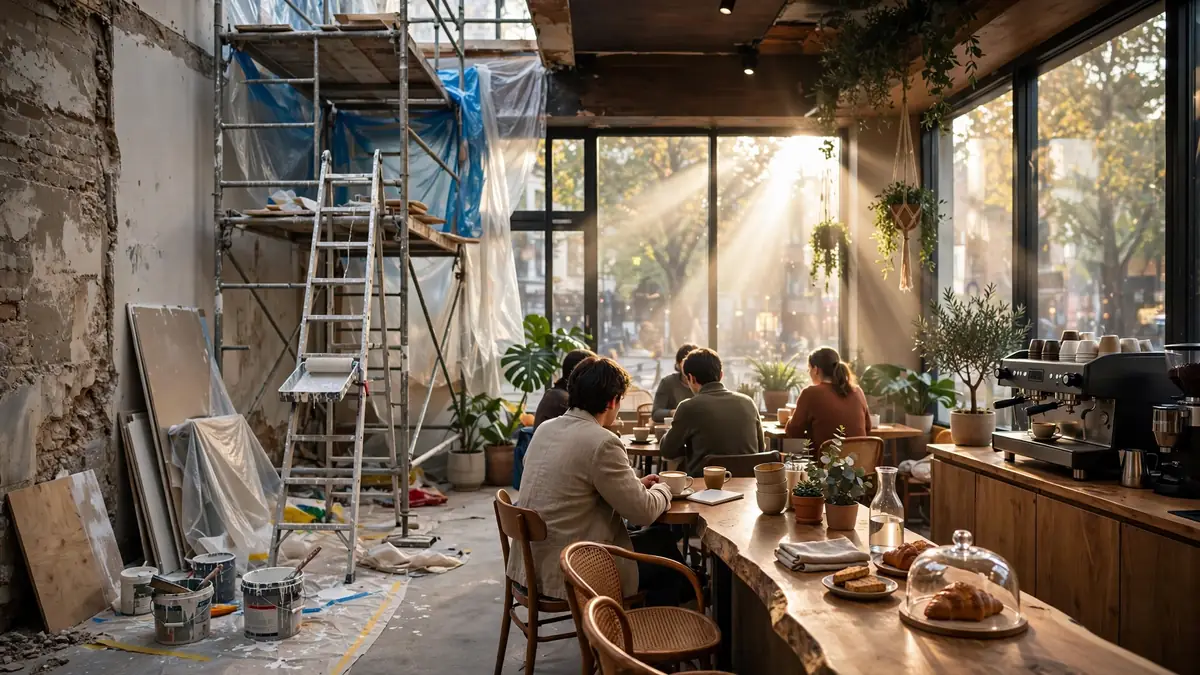
First, invest heavily where the customer feels it. Starbucks committed about $500 million to service training and new ordering technology aimed at cutting customer wait times, according to reporting from TheStreet citing QSR. The company also launched a store renovation program — about 1,500 remodels by the end of September 2026, at roughly $150,000 per store, or about $225 million of capital — designed to make cafes warmer and encourage customers to sit and stay.
Second, prune without sentimentality. The September 2026 announcement of about 250 North America closures — roughly one percent of more than 18,000 regional coffeehouses — was the second wave. A year earlier, the company had closed 627 stores across North America and Europe and cut 900 non-retail jobs. That is 877 closures in thirteen months under Niccol. COO Mike Grams told employees the review had identified locations where Starbucks cannot consistently deliver the experience it wants or sees no path to acceptable financial performance. Even revenue-generating stores are candidates for closure if their physical configuration or economics make the experience impossible to deliver.
Third, simplify the corporation around the stores. In May 2026, Starbucks laid off an additional 300 corporate employees and closed some U.S. offices. In April, it closed a joint venture with Boyu Capital that handed the firm 60% of its China stores, leaving Starbucks with 40% — removing operational complexity and geopolitical overhang in one move. The company also cut its fiscal 2026 net new openings outlook from 600–650 to about 440, directing new growth to international markets while the North America portfolio is reset.
Results as reported
The fiscal third quarter of 2026, ended June 28, provided the strongest evidence yet that the plan is working:
- Global comparable-store sales rose 7.9%, driven by a 4.2% increase in transactions and a 3.5% increase in average ticket — the fourth consecutive quarter of comparable-sales growth.
- North America comparable-store sales rose 8.1%, with transactions up 4.5% and average ticket up 3.5% — meaning customers are both visiting more and spending more per visit.
- Adjusted earnings per share hit $0.85, beating analyst expectations of $0.66 by close to 31%.
- Consolidated net revenues fell 1% to $9.3 billion — not a sign of weakness but the accounting effect of no longer counting all China sales after the joint venture.
- Management raised full-year guidance to adjusted EPS of $2.55–$2.65 with global comparable sales growth of about 6%.
The turnaround in the numbers is real, but so is its cost. North America operating margin expanded to 13.6%, up 30 basis points — yet that improvement was constrained by restructuring costs and higher labor investment, which reduced the quarterly margin by approximately 190 basis points. Starbucks is spending more in viable stores, not simply removing labor to maximize short-term margins. The bet is that stronger traffic and loyalty will eventually produce enough profit to offset higher labor and refurbishment costs.
Key lessons
Fix the experience, not just the economics. Niccol bet half a billion dollars on labor, training, and simpler operations instead of promotions. Transactions are rising — the hardest metric to move — which suggests customers are returning for the experience, not the discount.
Closing stores can be a growth strategy. Two hundred and fifty closures alongside 8.1% growth is only a paradox if you think of all stores as equal. Starbucks is explicitly treating its portfolio as something to curate: invest in cafes with a future, switch off the ones without one.
Protect premium pricing with premium experience. While rivals cut prices, Starbucks is holding its prices and improving the room. The renovation program and labor investment are the substance behind the pricing power.
Simplify the corporate layer around the stores. Office closures, corporate layoffs, and the China joint venture all point the same way: the turnaround is as much about removing complexity as about adding investment. Those two moves fund each other.
Brian Niccol's summary in the earnings report was measured: "Our Back to Starbucks plan was built on the belief that an extraordinary cup of coffee, human connection and customer experience win the day, every day. Our third quarter results are proof they do. We have more work to do, but we're relentlessly focused on reclaiming the third place and becoming the world's greatest customer service company."
Sources