At its annual Connect event on September 23 and 24, 2026, Meta unveiled a hardware lineup that makes its ambition unmistakable: the company no longer just wants to sell smart glasses — it wants its personal AI agent, Muse, to be the device you carry, wear, and talk to all day. The announcements spanned three product categories: a pocket-sized Muse device called the Muse Charm, camera-free Ray-Ban Meta Audio glasses, an updated camera-equipped Ray-Ban Meta Gen 3, and lightweight Meta VR Glasses aimed at spring 2027.
Together, the launches mark a strategic pivot. Where Meta's previous wearables bet centered on augmented reality displays and cameras, this year's lineup is organized around one thread: Muse, the personal AI assistant Meta launched in early September, becoming the primary interface across every device the company ships.
Muse Charm: a pocket for the AI
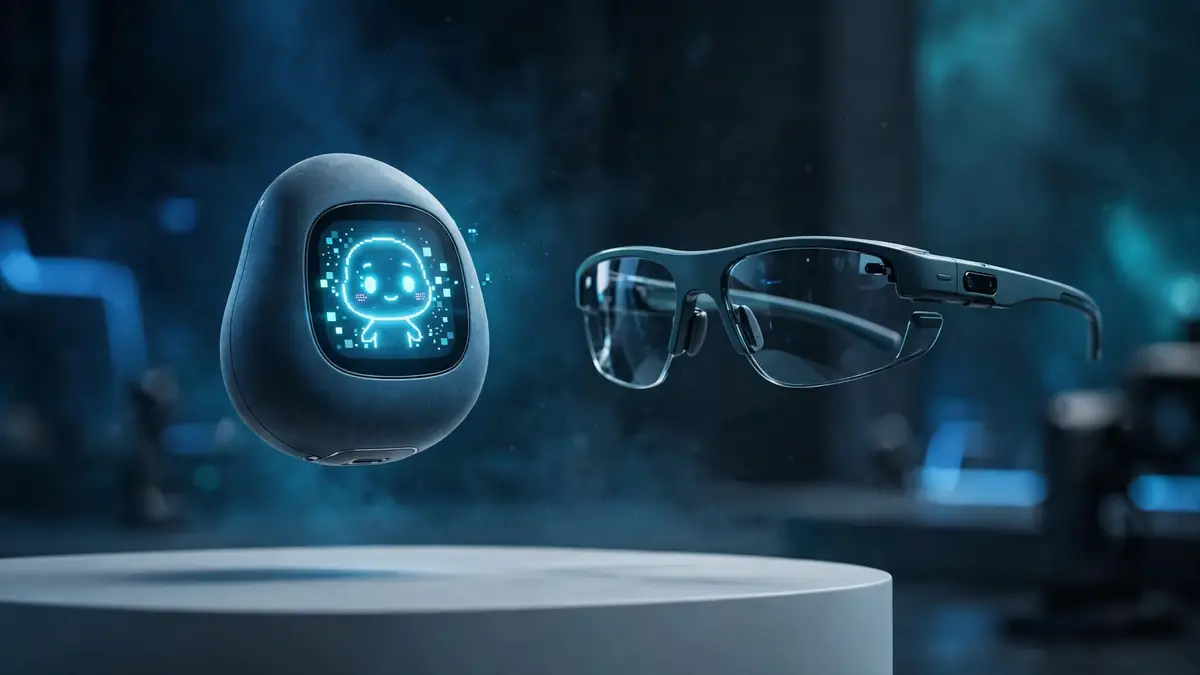
The most talked-about reveal was the Muse Charm, a small palm- or keychain-sized device built around Meta's Muse AI agent. Meta describes it as the fastest way to talk to Muse — a dedicated, always-on companion with a real-time voice model, a small display showing an animated avatar, a front-facing camera, a fingerprint sensor for waking the device, and an action button. Users can speak to Muse to send emails, book tickets, and handle forms, with Meta saying the agent runs in a secure virtual machine with memory of previous conversations.
Meta has not announced a price or full specifications for the Charm, and reports differ slightly on timing: Meta says it will share more details later this year, with several outlets reporting a December 2026 holiday-season target, while chief executive Mark Zuckerberg suggested during the keynote that the device was in late-stage development and could be available for purchase in the coming weeks. The device arrives with no price attached — the nearer the launch, the less Meta has said about what it will cost.
Meta also introduced its first camera-free smart glasses: the Ray-Ban Meta Audio, priced at $349 in the United States (£269 in the UK) and shipping from October 13, 2026. The audio-only design is deliberate. Meta's camera-equipped smart glasses, first launched in 2023, attracted sustained criticism — including bans at venues and accusations of non-consensual recording — and Meta says demand exists for glasses without cameras. Audio was, in Meta's telling, consistently one of the most popular features of the camera models.
The specifications are aimed at all-day wear: the glasses weigh 43 grams, promise up to 12 hours of battery life on a single charge with up to 48 additional hours from the included charging case, and support music playback, calls, and hands-free voice access to Muse. They come in new styles including Clubmaster and Burbank, with prescription lenses available. Privacy advocates will note a wrinkle: unlike the camera models, the audio-only glasses offer no clear visual signal to bystanders when audio recording is active — a design trade-off Meta will likely have to keep defending.
For buyers who do want a camera, Meta refreshed its camera-equipped line with the Ray-Ban Meta Gen 3, starting at $449, keeping the 12-megapixel camera and 3K video recording while adding a customizable action button and up to nine hours of battery life. The company also announced a new Meta Glasses collection with fresh frames and collaborations.
The more forward-looking reveal was the Meta VR Glasses: a roughly 100-gram headset with 5K micro-OLED displays, gaze and hand controls, and a separate pocketable puck that handles computing, battery, and storage so the headset itself stays light. Meta priced it at $1,299.99 with a spring 2027 target. The puck's weight was not disclosed — another of Connect 2026's conspicuous omissions, alongside the Charm's price.
Muse becomes the interface
Hardware aside, the software story may matter more. Meta said its personal AI agent Muse is coming to its AI glasses in the coming months, positioning the assistant as the primary interface for the smart glasses line. On the software side, Meta added four new capabilities to the Muse path: video chat, agent email, computer use on Mac, and Muse on smart glasses.
Meta also emphasized privacy architecture — "private processing" and a "Confidential VM" design the company says even its own staff cannot access — a message clearly aimed at preempting the backlash that greeted earlier camera glasses. The tension is structural: an always-on AI agent that remembers conversations and acts on your behalf needs deep access to your life, and Meta is asking users to trust that access is sealed. The company faces ongoing regulatory scrutiny over earlier camera-equipped glasses as it expands sales into new markets, and Muse itself has already drawn criticism in some quarters.
What Connect 2026 signals
Analysts at the event noted a pattern in Meta's disclosures: the device arriving soonest has no price, the larger system's companion weight is undisclosed, and one entire product line exists to remove a sensor by design. But the direction is not ambiguous. Meta's wearables are being recast around ambient AI — computing that doesn't ask you to unlock a phone, open an app, or tap a screen.
The reception so far has been cautiously optimistic for the hardware and more skeptical about the agent layer. Shares in Meta reportedly jumped on the announcements, suggesting investors like the hardware roadmap. The harder question is behavioral: will people who never bought smart glasses carry a dedicated AI pendant, and will an assistant that remembers everything about them earn trust in markets where Meta's camera glasses are still banned from pubs, theatres, and naval bases? Meta's answer — confidential computing, private processing, and a camera-free option — is at least a recognition of the question.
The bet is that voice-first, agent-driven hardware can succeed where smartphone-era wearables struggled: by being present without demanding attention. Whether consumers agree — and whether they will pay for a pocket gadget whose price Meta hasn't named — will be the test of the 2026 holiday season.
Sources