Disclosure: Meridian has not independently tested the Motorola Signature 27. This review is an informed analysis based on Motorola's announced specifications, launch coverage from the Snapdragon Summit, and published expert commentary — with every source cited at the end.
For years, the American ultra-premium smartphone conversation has been a two-player game: Apple and Samsung, with everyone else fighting for the remaining shelf space. On September 22, 2026, at Qualcomm's Snapdragon Summit, Motorola made its most direct challenge yet to that duopoly. The motorola signature 27 — the second-generation model in Motorola's Signature family — is among the first phones announced with Qualcomm's new Snapdragon 8 Elite Extreme Gen 6, and unlike its predecessor, it is confirmed for the United States. The name itself signals ambition: the "27" aligns the lineup with the 2027 model year, giving Motorola a clean, year-based naming structure for future flagships.
Flagship silicon, flagship cooling
The Signature 27 is built around the Snapdragon 8 Elite Extreme Gen 6, Qualcomm's new 2nm flagship platform with CPU speeds reaching 5GHz. Motorola describes the Signature 27 as its fastest Android phone to date — a manufacturer claim that awaits independent benchmark verification, since no third-party performance data has been published yet. To sustain that performance, Motorola developed a new ArcticMesh cooling system combining diamond-infused thermal gel, liquid metal, copper mesh and a redesigned 3D vapour chamber that the company says is 40 percent larger than the previous generation's. The cooling story matters: sustained AI workloads, gaming and 8K video recording are precisely where thin flagships throttle, and Motorola is clearly targeting buyers who push their phones hard.
The phone runs Android 17 with up to 16GB of RAM. Perhaps more significant for long-term value is Motorola's software commitment: seven years of operating system and security updates. That pledge puts Motorola in the same league as Samsung and Google on update longevity — a meaningful shift for a brand whose update record has historically been a weakness, and a genuine consideration for anyone buying a phone at ultra-premium prices.
Camera: the 200MP periscope play
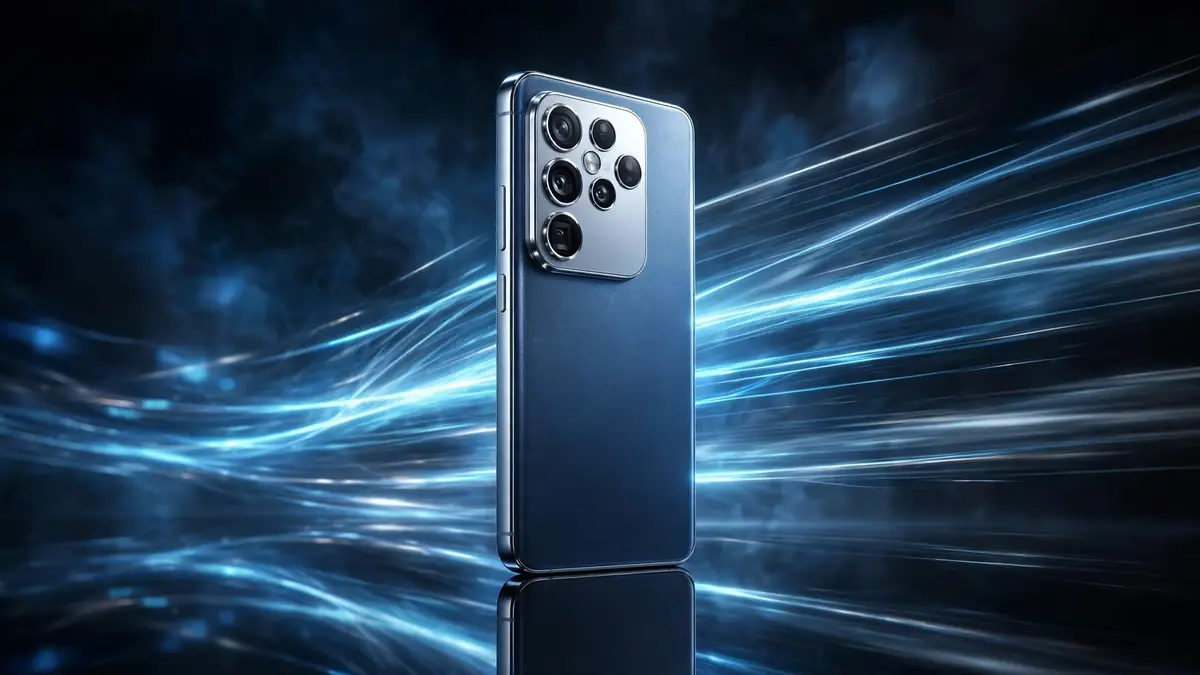
The camera system is where the Signature 27 makes its boldest statement. The headline is a 200-megapixel periscope telephoto lens with what Motorola calls 100x Super Zoom Pro, assisted by generative AI. It sits alongside a 50MP Sony LYTIA 910 main sensor with optical image stabilisation and a real-time Video Enhancement Engine, a 50MP ultra-wide camera and a 50MP front-facing camera. Dolby Vision capture is supported, and the camera module carries "100x Super Zoom" and Dolby Vision markings.
The strategy is clear: rather than competing with Samsung on sensor size alone, Motorola is competing on reach. A 200MP periscope with AI-assisted 100x zoom is aimed squarely at buyers who photograph concerts, sports and wildlife — the use cases where optical reach matters most. The honest caveat is that extreme digital zoom has historically been more marketing than magic; the 100x figure will need independent testing to determine how much usable detail survives at the far end of the range. The Sony LYTIA main sensor and dedicated video engine suggest Motorola is taking video as seriously as stills, which would address another historical weakness of its flagships.
Display, audio and design
Reported specifications point to a 6.8-inch LTPO AMOLED display with a 165Hz refresh rate, HDR10+ and Dolby Vision support, and a peak brightness of 6,200 nits — figures that would put it among the brightest and smoothest panels on any phone. The design features a textured rear finish, a large multi-camera island and a Pantone-oriented colour direction, continuing Motorola's recent emphasis on distinctive materials and finishes. Exact dimensions, weight and materials had not been fully detailed in launch materials at the time of writing.
Audio gets an unusual headline feature: a multi-year partnership with Bang & Olufsen, with Motorola stating that the Signature 27 is the first phone to carry the jointly developed B&O-tuned audio system. Phone speakers are rarely a purchase driver, but premium audio tuning signals the broader positioning Motorola wants — this is a device meant to feel luxurious, not just fast.
Battery and durability
Power comes from a 6,000mAh battery with 90W wired fast charging and 50W wireless charging, alongside an IP68 rating for dust and water resistance. The 6,000mAh figure is respectable without being class-leading — Xiaomi's 8,500mAh cell in the 18 Pro Max shows where the ceiling now sits — but 90W wired charging means a top-up takes minutes rather than an hour. For American buyers, the practical question will be carrier compatibility and whether Motorola's historically strong battery optimisation carries over to the new silicon.
Price and availability: what we know and what we don't
Here, candour is essential. Motorola has not announced official pricing for the Signature 27. Figures circulating online — such as an indicative ₹89,999 for India seen on retail listings — are estimates from third-party listings, not confirmed retail prices, and should be treated as such. For context, the first-generation Motorola Signature launched in India at ₹59,999 and in select European countries from €999; the new model's faster chip, upgraded cameras and B&O partnership could move the final figure in either direction.
What is confirmed is the US commitment. Motorola's US product page identifies the Snapdragon 8 Elite Extreme Gen 6 as the phone's processor and indicates that further details and an availability window are coming in November 2026. That makes the Signature 27 one of the few Snapdragon 8 Elite Extreme Gen 6 phones with a confirmed American launch — a notable distinction when rivals like Xiaomi's 18 Pro Max have historically skipped the US market. Until Motorola publishes regional pricing, storage tiers and a sale date, buyers should treat availability as a roadmap rather than a guarantee.
Considerations and open questions
The Signature 27's biggest risk is the gap between announcement and evidence. No independent benchmarks, camera samples or battery tests exist yet. Motorola's camera processing has been inconsistent in past generations, and a 200MP periscope is only as good as the software behind it. The 165Hz display and 6,200-nit brightness figures come from launch reporting rather than independent measurement. And while seven years of updates is promised, Motorola will need to actually deliver them on schedule to earn trust.
There is also the question of brand perception. In the US, Motorola is still widely associated with budget and mid-range devices. Convincing buyers to spend ultra-premium money on a Motorola badge is a marketing challenge as much as a hardware one — though the original Signature's positive reception in Europe suggests the foundation exists.
On paper, the Motorola Signature 27 is the most complete flagship Motorola has ever announced: cutting-edge silicon with serious cooling, a genuinely distinctive camera system, premium materials, B&O audio and a seven-year software pledge. The confirmed US launch is the real news — it turns the Signature 27 from an interesting import into a genuine alternative to the Galaxy S26 Ultra for American buyers. The wise move is to wait for November's US details and the first independent reviews. If the camera and thermals deliver on the promises, Samsung's comfortable duopoly in the American ultra-premium segment may finally have a third contender worth taking seriously.
Sources