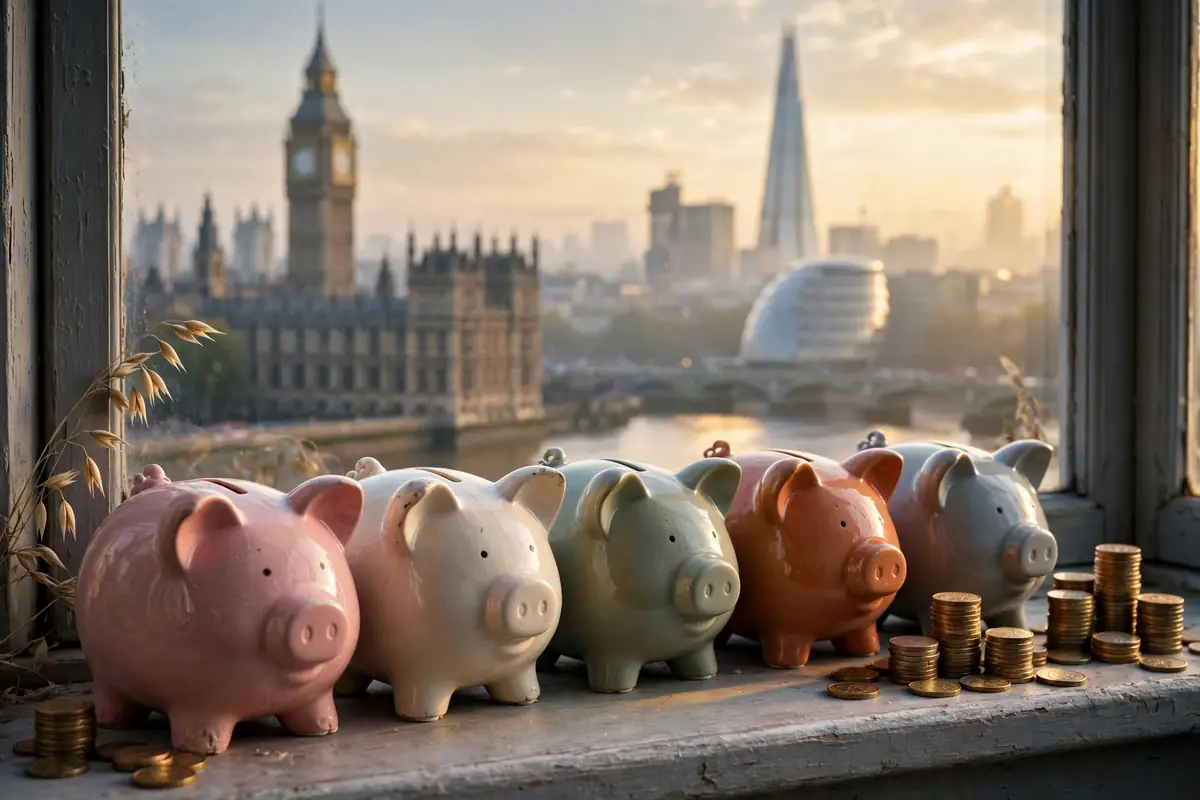
A Budget Shaping Up Around Savers' Pockets
With the Autumn Budget due on October 28, Britain's savers are heading into the most consequential few weeks for their money in years. Chancellor John Healey is preparing a Budget framed around growth and industrialisation — but the measures already in motion, and those reportedly under consideration, point to a tighter tax environment for anyone holding cash or building a pension.
The unease is measurable. Research released by PensionBee on September 28 found that 57% of savers are unsure the government will protect their pension savings in the upcoming Budget. It is a striking confidence gap for a government that needs long-term savers to keep doing exactly what they are doing: putting money away.
Several fiscal currents are converging at once. Understanding each of them — and how they interact — is the key to making sensible decisions before and after Budget day.
Fiscal Drag: The Frozen Thresholds Pulling Millions Into Higher Tax
The most powerful force is the quietest one. The income tax Personal Allowance remains frozen at £12,570 until April 2031, meaning wage inflation steadily drags more earners over the threshold and up the tax bands — a process economists call fiscal drag. HMRC data suggests the freeze will push the number of higher-rate taxpayers to 7.7 million in 2026/27, up 1.9 million from 2023/24. The Office for Budget Responsibility has estimated that the extended freeze on income tax bands will create 4.8 million more higher-rate taxpayers and 600,000 more additional-rate taxpayers.
Why does this matter for savers? Because the tax you pay on savings interest depends on your income tax band. The Personal Savings Allowance — the amount of interest you can earn tax-free outside an ISA — is £1,000 for basic-rate taxpayers, £500 for higher-rate taxpayers, and £0 for additional-rate taxpayers. Every saver dragged into a higher band sees their savings allowance shrink or vanish entirely.
PensionBee's research found that 69% of savers want the Personal Allowance unfrozen, with 43% demanding immediate action. Whether the Chancellor listens remains the central question of the Budget.
Savings Income Tax Is Set to Rise in 2027/28
Confirmed in last year's Autumn Budget: the tax rates applied to savings income will increase by two percentage points from 2027/28. Basic-rate taxpayers will pay 22% on interest above their Personal Savings Allowance (up from 20%), higher-rate taxpayers 42% (up from 40%), and additional-rate taxpayers 47% (up from 45%).
The arithmetic is already biting at today's rates. With easy-access accounts paying around 4.5%, a higher-rate taxpayer breaches the £500 allowance with just over £11,000 of savings. On a £20,000 balance at 4.5%, a higher-rate saver would owe roughly £160 in tax while an additional-rate saver owes about £405 — a basic-rate saver, with the full £1,000 allowance, pays nothing. From 2027/28, those bills get bigger.
There is also the starting rate for savings: up to £5,000 of interest can be tax-free for those whose non-savings income is below £17,570, tapering by £1 for every £1 of income above the Personal Allowance. It is a valuable but little-understood relief, worth checking if your earnings are modest.
The single most effective defence, as ever, is the cash ISA. Interest inside an ISA sits entirely outside the Personal Savings Allowance — £20,000 in an easy-access cash ISA at 4.5% produces zero tax. Which brings us to the ISA question hanging over the Budget.
ISA reform is on the table, and it arrives at an awkward moment — just as rising savings taxes make tax-free alternatives more attractive. The direction of travel signalled by the Treasury has been toward encouraging Britons to invest in equities rather than hold large cash balances, with cash ISA allowances reportedly under review.
Until the Chancellor speaks on October 28, the details remain speculation, and savers should treat every rumoured figure with caution. What is certain is the principle: use this year's ISA allowance before it can be changed. Allowances are use-it-or-lose-it each tax year, and money already inside an ISA keeps its tax-free status regardless of future rule changes. If you have cash savings earning interest outside an ISA, moving up to £20,000 into one before the end of the tax year is the highest-value defensive move available.
A related proposal reported ahead of the Budget would lift the Personal Allowance by £3,000 — saving basic-rate taxpayers around £600 a year — while pushing capital-gains tax as high as 45%. That package, reported as a Budget submission rather than government policy, illustrates the trade-offs in play: relief for earners funded by heavier taxation of investment gains. Investors holding assets outside ISAs and pensions would carry the sharpest exposure if such a change were adopted.
Pensions: Inheritance Tax Changes and the Triple Lock Squeeze
Pension savers face their own set of pressures. From April 2027, unused pension pots will be included in estates for inheritance tax purposes — a change designed to stop pensions being used primarily as wealth-transfer vehicles. PensionBee's research suggests more than a quarter of savers would consider drawing their pension funds earlier once the IHT changes take effect, a response that could compromise their long-term retirement security.
Meanwhile, the pensions Triple Lock continues its slow collision with frozen thresholds. A projected 3.9% increase could push the full new State Pension above the frozen £12,570 tax-free threshold — effectively bringing more pensioners into the tax net for the first time. It is fiscal drag applied to retirees: a "rise" in pension income that leaves some pensioners paying tax on money they never paid tax on before.
What UK Savers Can Do Before October 28
Budget speculation rewards the prepared and punishes the panicked. A few measured steps:
- Use your ISA allowance now. Do not wait for Budget day to discover the rules have changed. Bed-and-ISA transfers of existing investments, and moving cash savings into a cash ISA, both protect future growth and interest from tax.
- Check your Personal Savings Allowance exposure. If fiscal drag has pushed you into a higher band — or is about to — recalculate how much of your savings interest will be taxable. You may be paying more than you think.
- Review pension contributions. Higher-rate taxpayers get particularly valuable relief on pension contributions, and salary-sacrifice arrangements can also reduce National Insurance. With IHT changes coming for pensions in 2027, it is worth reviewing — not rushing — your estate planning. Drawing a pension early purely to beat a tax change can backfire if it leaves you short in later life.
- Do not make irreversible moves on rumours. Reported proposals are not policy. Crystallising gains, surrendering investments, or restructuring finances around a headline that never becomes law is a classic Budget-season mistake. Prepare, position, and wait for the actual announcements.
- Consider professional advice for larger estates. The interaction of frozen thresholds, rising savings taxes, and pension IHT changes is genuinely complex. For estates approaching the inheritance tax threshold, qualified financial advice is likely to pay for itself.
The Bottom Line
Britain's savers are caught between two truths: interest rates have finally made cash savings rewarding again, with easy-access accounts paying around 4.5–5%, while the tax system is quietly taking a bigger share of the reward. The October 28 Budget will determine how much bigger. Whatever the Chancellor announces, the defensive toolkit does not change — ISAs, pensions, and allowances used early beat clever reactions made late.
Sources