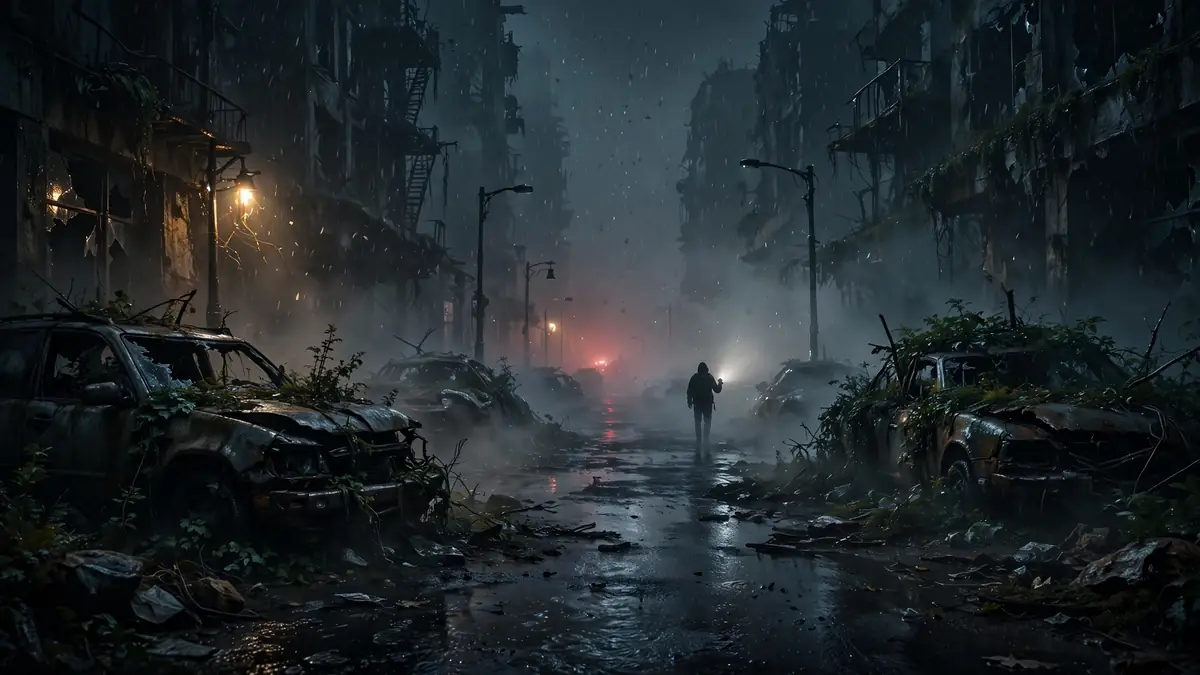
The video game adaptation curse has been declared dead many times. This time, the evidence is hard to argue with: Resident Evil, Zach Cregger's reboot of the 24-year-old horror franchise, has crossed $196 million at the worldwide box office in just two weekends — becoming the first film in the series ever to pass $100 million domestically — while holding a 96 percent rating on Rotten Tomatoes, the best-reviewed entry the franchise has ever produced.
Those two achievements — critical and commercial — almost never arrive together for this property. Sony's previous attempt to revive the series, 2021's Resident Evil: Welcome to Raccoon City, managed just $17 million domestically and was a critical and commercial disappointment. Cregger's version, built for a reported $75 million, has nearly tripled that domestic total in nine days and passed its estimated $150 million break-even point in the same span.
A record opening, then a hold
The reboot opened on September 18 with $60 million domestically — the biggest opening weekend in franchise history, more than doubling the previous record of $26 million set by 2010's Resident Evil: Afterlife — and $108.3 million worldwide including $48.3 million from international markets. It outperformed its pre-release tracking, which had it in the $40–50 million range.
The second weekend brought a 61 percent drop to $23.3 million — steep, but expected for a front-loaded horror title, and still enough to surrender the top spot only to the Avengers: Endgame "Encore" re-release. More importantly, it carried the film past $100 million in North America, a line no previous Resident Evil film had ever crossed, and to $196.4 million worldwide — with releases in China and Japan, historically strong markets for the series, still ahead of it.
What Cregger did differently
The film's design is the story. Rather than adapting any single game's plot, Cregger and co-writer Shay Hatten built an original story around an original character — Bryan, a medical courier played by Austin Abrams, who is thrust into a viral outbreak of infested monsters in Raccoon City over the course of one horrifying night. The supporting cast includes Zach Cherry, Kali Reis, and Paul Walter Hauser.
Critics have praised the movie's game-like structures: survival-horror pacing, level-like escalation from sewers to a maternity ward, and first- and third-person camerawork designed to recreate the tension of playing the games rather than watching a frame-by-frame adaptation. The production leaned into R-rated gore and practical creature work — including stunt performers physically creating a large "merged" monster — at a lean 95-minute runtime. Opening-night audiences gave it a B+ CinemaScore, strong for the genre.
The approach marks a clear break from the franchise's history of treating the games as costume rather than blueprint. It also explains the unusual critical consensus: 96 percent on Rotten Tomatoes makes this the highest-rated film of Cregger's career, ahead of Barbarian (2022) and Weapons.
The Cregger effect
Horror has quietly become one of the most dependable genres at the box office, and few directors have capitalized on it like Cregger. His 2022 breakout Barbarian became a word-of-mouth hit, and Weapons finished with $270 million worldwide on a $38 million budget — and earned Amy Madigan the Academy Award for Best Supporting Actress, a genuine Oscar win for a horror film.
Resident Evil outperformed even Weapons, which had opened to $43.5 million domestically. Box office analyst David A. Gross told Variety: "This is a big comeback after the previous episode stumbled during the pandemic. Reviews are outstanding, and the audience score is excellent for the genre." Rentrak analyst Paul Dergarabedian credited Cregger with making a familiar franchise feel fresh, pointing to Gen Z's enthusiasm for horror as a major driver — a generation that, Rentrak notes, has powered more than $1.1 billion in domestic horror grosses this year alone.
Sony's awards ambitions
Perhaps the most surprising development is what Sony plans to do with the acclaim: the studio is reportedly mounting an awards campaign for the film, focused on technical categories, with voter screenings already booked. The marketing is leaning into the reputation — one poster highlights TheWrap critic William Bibbiani's praise of Cregger as a modern master of horror.
Genre films face long odds with awards voters, and nobody is confusing this with a Best Picture campaign. But after Weapons converted horror credibility into an actual Oscar, the strategy is less far-fetched than it would have seemed a year ago. At minimum, it signals how thoroughly the film has changed the conversation around a franchise many had written off.
What comes next
The question now is legs. The 2016 entry Resident Evil: The Final Chapter remains the series' highest grosser at $312 million worldwide, with more than half of that coming from China. With China and Japan still to open and strong word of mouth behind it, Cregger's reboot has a credible path toward that number — and fans are already calling for him to return for a follow-up.
Sony has not announced a sequel. But a $75 million film that broke franchise records, earned the series' best reviews, crossed a domestic threshold eight films never reached, and generated genuine awards chatter has given the studio something it has not had in years: options.
The scale of the turnaround is worth stating plainly. The opening weekend alone nearly matched the entire lifetime domestic total of 2010's Resident Evil: Afterlife, which finished at $60.1 million — Cregger's reboot did in three days what the franchise's previous biggest opener did in its whole run. Combined with a 96 percent critics' score, a B+ from opening-night audiences, and a production praised for packing its scares into a tight 95 minutes, the film has reset expectations for what a video game adaptation can achieve — critically, commercially, and culturally.
Sources