A standout first half
While the world’s largest luxury groups dominate the headlines, some of the industry’s most impressive growth stories are being written by smaller maisons. FOPE, the historic Italian goldsmith company founded in Vicenza in 1929, reported strong first-half 2026 results this week: net revenues rose 32% year on year to €56.8 million, with profitability expanding across every measure.
EBITDA increased to €14.8 million, lifting the margin to 26.1%. EBIT reached €13.3 million, and net profit surged to €9.4 million. For a company with just over 110 employees, those are remarkable figures — the kind of margins that many far larger luxury players would envy.
The results are particularly notable because they were achieved against a challenging input-cost backdrop. Higher sales volumes combined with pricing actions helped offset gold price increases, demonstrating a pricing power that is the hallmark of genuine luxury positioning: when your brand commands it, you can pass costs through without losing the customer.
Where the growth comes from
FOPE’s growth was broad-based. The company reported solid performance in its core markets in Europe and America, alongside accelerating growth in Japan, South Korea and Southeast Asia — the Asian markets that have become the luxury industry’s most important battleground.
The geographic mix underscores how international this supposedly “Italian” company has become: around 87% of FOPE’s revenue is generated abroad. The group’s strategy is explicitly centered on expanding and consolidating its brand in mature markets such as Europe and the United States while pushing into emerging Asian markets — and the first-half numbers suggest the strategy is working on both fronts.
That balance matters. Many mid-sized European luxury brands find themselves overexposed to a single region; FOPE’s diversified footprint gives it resilience when any one market softens, and optionality when new ones accelerate.
Gold prices and the pricing lever
The mention of “pricing actions to offset gold price increases” deserves attention, because it reveals something important about where FOPE sits in the market. Jewelry is uniquely exposed to commodity costs: when gold rises, a jeweler either absorbs the margin hit or raises prices and risks demand.
FOPE did the latter — and demand held. Net profit surged to €9.4 million, which means the pricing actions more than compensated. That is only possible when customers are buying the brand and the design, not the metal by weight. It is the difference between a commodity business and a luxury business, and FOPE’s first half places it firmly in the second category.
The 26.1% EBITDA margin tells the same story from a different angle. In manufacturing-heavy luxury, margins like that reflect both operational discipline and genuine brand equity — the ability to make in Italy, at Italian cost levels, and still earn like a luxury house.
The Vicenza heritage
FOPE’s story begins in 1929 in Vicenza, the Veneto city that has been Italy’s goldsmithing capital for centuries. Nearly a century later, the company remains rooted there, developing and selling premium jewelry collections positioned at the upper end of the market, built on Italian manufacturing heritage and a distinctive brand identity.
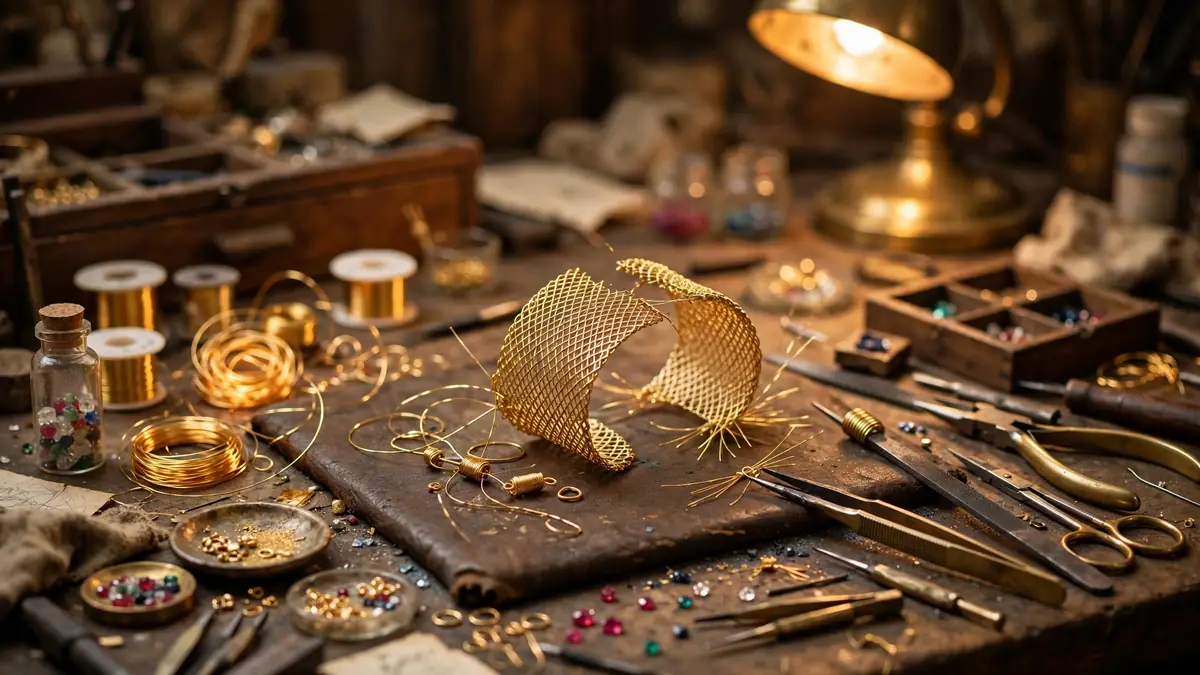
That heritage is not decoration; it is the business model. In a segment where provenance is currency, “made in Vicenza” carries weight with retailers and collectors from New York to Seoul. The company’s collections are known for their flexible gold mesh designs — jewelry engineered to move with the wearer — a technical signature that competitors have found difficult to replicate.
With over 110 employees, FOPE is a minnow next to the conglomerate-owned jewelry giants. But its listing on Euronext Growth Milan gives it access to public capital markets, and management is clearly intent on using that platform: the company is intensifying its engagement with investors through participation in European MidCap events and Lugano investor conferences, underlining its ambition to consolidate its positioning in the international luxury jewelry segment.
What management signaled
Management signaled confidence in a positive full-year outcome, citing an expanding order book and encouraging post-half-year trading. For a wholesale-driven jewelry business, the order book is the most honest forward indicator available — it represents real commitments from retail partners, not forecasts — so an expanding one is meaningful.
The balance sheet supports the optimism. The group maintained a cash-positive net financial position of €9.9 million, giving it the flexibility to invest in growth without leaning on debt. Equity declined to €48.4 million, mainly due to a negative hedging reserve and dividend distribution — the latter being a sign of shareholder returns rather than distress — even as share capital and reserves rose to €53.6 million.
Analyst sentiment is constructive: the most recent rating on the stock is a Buy with a €50.00 price target, and the company’s market capitalization stands at about €305.1 million. For investors hunting luxury exposure beyond the mega-caps, FOPE is increasingly on the radar.
Why it matters for luxury jewelry
FOPE’s first half is a reminder that the luxury jewelry market’s health is not determined solely by the giants. Mid-sized maisons with genuine craftsmanship, clear design signatures and international distribution can grow faster than the market — 32% revenue growth in a half year is exceptional by any standard — while earning margins that validate their positioning.
It also illustrates where the industry’s growth is coming from in 2026. The acceleration in Japan, South Korea and Southeast Asia mirrors a broader pattern across luxury: as some Western markets normalize, Asia’s appetite for fine jewelry — particularly pieces with authentic European craftsmanship stories — continues to deepen.
There is a broader lesson here for luxury investors as well. The mega-cap groups will always dominate index weightings and headlines, but some of the sector’s most interesting compounding stories are happening one tier down — in profitable, craft-led businesses that are quietly building global distribution. FOPE’s investor-relations push, from European MidCap events to Lugano conferences, suggests management understands exactly which audience it needs to reach next: the institutional investors who have historically overlooked jewelers of this scale.
Sources