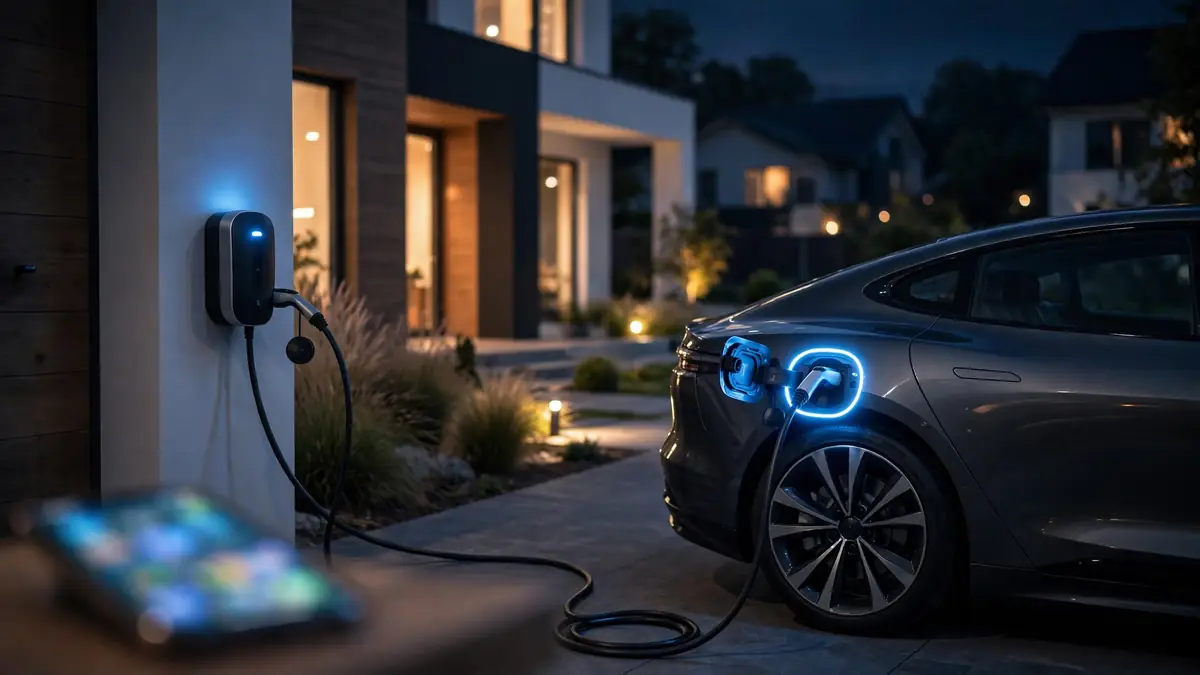
Electric cars have reached a tipping point in 2026: purchase prices have fallen, grants are back on the table in several markets, and the gap between home charging and public charging costs has never mattered more. Where and when you charge your battery now determines whether an EV is dramatically cheaper than a petrol car — or barely cheaper at all.
This guide covers everything a new or prospective EV driver needs to know about home charging in 2026: equipment, costs, tariffs, grants, the no-driveway problem, and how to size up the used-EV market. Figures below are UK numbers for 2026, widely cited in current motoring guides; if you are in the US, Canada or Australia, the principles are the same even where prices and incentives differ.
Why home charging changes the maths
The headline finding from 2026 charging guides is stark. A full home charge of a typical EV battery costs roughly £4 to £15, depending on battery size and tariff. Charging the same car on a public rapid charger can cost £52 to £63 for the equivalent ~250 miles of range. Home charging is typically 60–70% cheaper than public charging, and guides estimate it saves drivers around £500 per year compared with relying on public chargers.
The tariff makes all the difference. Current 2026 figures break down like this for roughly 250 miles of driving:
- Off-peak home tariff: 7–9p per kWh — a full charge costs £5.25 to £6.75.
- Standard flat-rate home electricity: 24–28p per kWh — a full charge costs £18 to £21.
- Public rapid chargers: 75–85p per kWh — a full charge costs £52 to £63.
Pairing a smart wallbox with an overnight EV tariff can drop effective driving costs to roughly 2.5p to 3p per mile — far below petrol. Overall, a home-charging driver covering around 8,000 miles a year typically saves £700 to £1,200 on fuel compared with a petrol car, plus £100 to £200 a year on servicing, according to 2026 UK motoring analysis. Drivers without home charging save less — which is why the rest of this guide exists.
Choosing a home charger
The standard recommendation for 2026 is a smart 7kW wallbox. It plugs into your home's electricity supply and adds roughly 25–30 miles of range per hour of charging — more than enough to refill overnight. The "smart" part matters: a smart charger can schedule charging during off-peak hours, integrate with EV-specific electricity tariffs, and sometimes work with solar panels or home batteries.
Installation typically costs around £800 to £1,000 for the charger plus fitting. Guides estimate that investment is usually paid back in fuel savings within 12 to 18 months of driving for a typical household — and within 2–3 years on the most conservative estimates.
Installation checklist:
- Book a home survey with an authorised installer. They will check your consumer unit (fuse box) — older units may need an upgrade to handle the additional 32-amp load — and confirm cable routing.
- Choose a smart 7kW unit that supports scheduled charging and works with off-peak tariffs. Look for built-in PEN fault protection, which avoids the need for a separate earth rod driven into your driveway.
- Switch to an EV tariff before or just after installation. Off-peak tariffs can cut charging costs by £400–£600 per year compared with standard rates; some salary-sacrifice arrangements push effective costs as low as £2–£7 per full charge.
- Weatherproofing is standard. Chargers and cables are designed to be weather-resistant, typically rated IP65 or higher, so charging in rain is safe.
Grants and incentives in 2026
Support schemes continue to reduce the upfront cost:
- Electric Car Grant (UK): £1,500 to £3,750 off eligible new electric cars priced under £37,000, applied automatically at the dealer. More than 40 models qualified as of 2026, with the list updated regularly — always check the current list before ordering.
- Home charging grant for renters and flat-dwellers (UK): a £350 grant toward a home charger is available to eligible renters and flat residents who cannot install a standard wallbox on a driveway.
- Salary sacrifice schemes: for employees, taking an EV through salary sacrifice can combine with cheap overnight charging for the lowest possible running costs.
Grants, prices and tax rules change — confirm the latest figures for your country before committing. This guide is general information, not financial advice.
No driveway? Your options
A significant minority of drivers cannot charge at home — flat-dwellers, renters, and anyone without off-street parking. Public charging typically costs 45–75p per kWh across the UK's 87,000+ public chargers, but there are ways to narrow the gap:
- Workplace charging — often the cheapest non-home option; ask your employer.
- Residential on-street chargers — growing networks of lamp-post and kerbside chargers in many cities.
- Discounted public charging schemes — membership programmes can reduce public rates substantially (some schemes bring effective rates down to roughly 27–45p per kWh).
- Route planning — apps that find the cheapest chargers along your route can meaningfully cut costs for longer trips.
If none of these fit, the economics of an EV weaken considerably — be honest with yourself about your charging reality before buying.
New vs used in 2026
Both make sense this year, for different reasons. Heavy manufacturer discounts have narrowed the usual gap between new and used, so a new EV — especially with the Electric Car Grant — can be surprisingly affordable. Meanwhile used EV values have fallen up to 28% from their peak, creating bargains for buyers who do their homework.
If you buy used:
- Get a battery health check. Battery degradation is real but slow — typically 2–3% per year — and most batteries are covered by long warranties. A health report tells you where a specific car stands.
- Check warranty remaining. Many used EVs are still under battery warranty, which is the expensive part to replace.
- Compare real-world range. Official WLTP figures are optimistic. Independent 2026 testing shows summer/winter gaps of 50–80 miles on many models — for example, a Tesla Model Y Long Range testing at roughly 290 miles in summer and 235 in winter, or an MG4 EV Long Range at roughly 240/185.
Running costs beyond charging
EVs also win on maintenance. With no timing belts, spark plugs, clutch assemblies or exhaust systems, routine scheduled servicing costs are generally 30–40% lower over a 3-year ownership cycle. For company-car and salary-sacrifice drivers, low benefit-in-kind tax rates continue to save thousands per year versus petrol or diesel equivalents.
Frequently asked questions
How much does it cost to install a home EV charger in 2026?
Around £800–£1,000 for a smart 7kW wallbox and professional installation in the UK, usually paid back in fuel savings within 12–18 months. Renters and flat-dwellers may qualify for a £350 grant.
Is home charging cheaper than public charging?
Yes — typically 60–70% cheaper. Off-peak home charging costs 7–9p/kWh versus 75–85p/kWh at public rapid chargers, a difference of roughly £5–£7 versus £52–£63 for ~250 miles.
Can I charge an EV in the rain?
Yes. EV chargers and cables are weather-resistant (typically IP65 or higher) and designed to be plugged and unplugged safely in downpours.
How long do EV batteries last?
Degradation is typically 2–3% per year and batteries are covered by long warranties. Most 2026-era batteries will comfortably outlast the car's first decade of typical use.
Sources