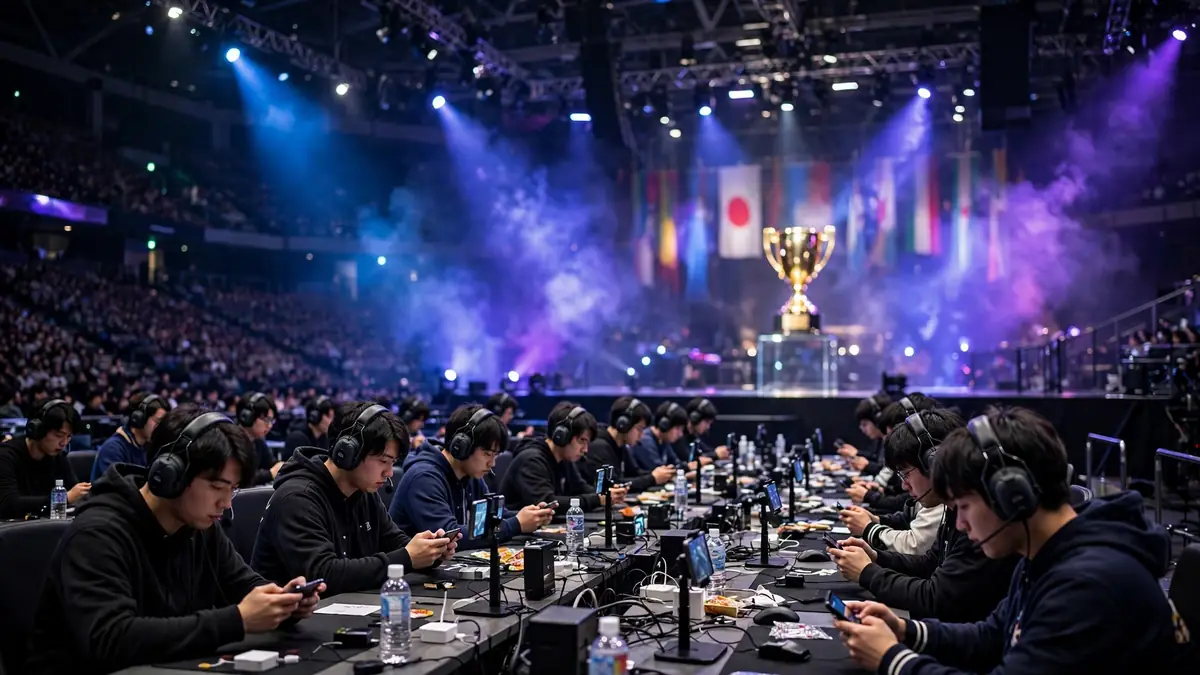
For two days in Aichi-Nagoya, Japan, the loudest cheers in the arena were not for a sprint finish or a last-second goal. They were for a battle royale. Team Thailand's triumph in the PUBG competition at the 2026 Asian Games this week — 128 points across two days of competition, ahead of defending champion China on 114 and a surging Pakistan on 100 — marked the nation's first esports medal at the Asian Games finals, and a milestone moment for competitive gaming's long campaign for recognition in international sport.
With 27 national teams involved in the PUBG tournament alone, organisers described the event as a significant milestone for the region. But the PUBG final was only half the story. Across town at the Aichi Sky Expo in Tokoname, Mobile Legends: Bang Bang has been contesting its first-ever gold medal at the Asian Games — with the best-of-seven final set for October 1.
Thailand's Breakthrough
The PUBG battle royale competition unfolded over two days of intense matches, and Thailand's victory was built on the kind of consistency that defines championship battle royale play. Their 128-point total held off China — the defending champions, who took silver with 114 points — while a strong final-day performance propelled Pakistan to the bronze medal with 100 points.
For Thailand, the gold carries weight beyond the podium. It is the nation's first esports medal at the Asian Games finals, a breakthrough that will resonate far beyond the arena — in a country where gaming is a massive cultural force but where competitive success at multi-sport events has, until now, remained elusive. For China, silver represents a rare stumble for a nation that has dominated esports at the Asian Games; for Pakistan, bronze is a statement result that underlines South Asia's rapid rise in competitive gaming.
MLBB's Historic First
If the PUBG final was about established rivalries, the Mobile Legends: Bang Bang tournament is about history being written for the first time. Running from September 29 to October 1 at the Aichi Sky Expo, the competition features 11 national teams chasing the first-ever MLBB gold medal at the Asian Games — a landmark for a title that dominates mobile esports across Southeast Asia but has waited years for this stage.
The format is built for drama: eleven teams split into four groups for a single round-robin group stage, with the top two from each group advancing to a single-elimination playoff bracket. Every match is best-of-three — except the gold medal match, a full best-of-seven series scheduled for October 1 at 1pm local time.
The contenders
The Philippines entered as the heavy favourite, represented by the core of Team Liquid PH — and with good reason, given that Filipino teams have won six of the seven MLBB World Championships. Indonesia, Malaysia, Myanmar and Cambodia arrived as legitimate contenders, reflecting Southeast Asia's deep and mature competitive scene. Iran withdrew from the tournament before it began.
The group stage, played on September 29, already delivered its share of clarity and chaos. In Group A, Myanmar (2-0) and Hong Kong (1-1) advanced while Uzbekistan (0-2) was eliminated. Group B saw Malaysia (2-0) and Indonesia (1-1) progress at Saudi Arabia's expense. Groups C and D — featuring the Philippines, Jordan, Kazakhstan, Cambodia and Mongolia — completed their round-robin battles with quarterfinals and semifinals staged across September 30. Every match has been streaming through the game's official YouTube, Facebook and TikTok channels, bringing Asiad esports to the platforms where its audience actually lives.
The Broader Esports Programme
PUBG and MLBB were the headline acts, but they sat within a wider esports programme at the Aichi-Nagoya Games featuring Japan's home teams competing across multiple titles — a home-soil showcase that gave local fans plenty to cheer beyond the two medal events dominating international coverage. The decision to stream every MLBB match through the game's official YouTube, Facebook and TikTok channels rather than locking coverage behind traditional broadcast deals was equally telling: organisers met the audience where it already lives, and the viewership figures from the group stage suggest the gamble is paying off.
That distribution choice points to the structural shift underway. Esports at multi-sport events has always wrestled with an identity question — is it a sport to be slotted alongside athletics and swimming, or an entertainment product with its own rules? The 2027 move to a dedicated tournament structure suggests the industry has chosen the latter, betting that purpose-built events will serve players and fans better than borrowed stages. This week's evidence from Aichi-Nagoya — packed arenas, national medals, millions of streams — suggests it is a bet worth making.
A Farewell With Meaning
There is a poignancy to this week's celebrations. Esports is set to leave the Asian Games programme for its own dedicated tournament structure in 2027 — a move that reflects both the scale competitive gaming has reached and the persistent friction of fitting it into traditional multi-sport frameworks. Aichi-Nagoya may therefore be remembered as the high-water mark of esports' Asian Games era: the edition where the competitions felt biggest, the crowds loudest and the medals most meaningful.
That context makes Thailand's gold and MLBB's debut all the more significant. These are not footnotes to someone else's games; they are the headline acts of a maturing competitive ecosystem that no longer needs anyone's permission to fill an arena. The 27 national teams in the PUBG competition, the millions watching MLBB's streams, the national federations now fielding esports delegations — this is infrastructure, not novelty.
What It Means Beyond the Medals
For the gaming industry, the Asian Games fortnight is a reminder of where the audience is. Mobile titles like MLBB and PUBG Mobile command player bases that dwarf most traditional sports' global followings, concentrated in the world's fastest-growing gaming markets across Asia. For sponsors, broadcasters and national sports bodies, the question is no longer whether esports belongs on the big stage — it is how to build the structures around it.
For the players, though, the meaning is simpler. A gold medal is a gold medal. Thailand's squad will return home as national heroes; the MLBB champions crowned on October 1 will make history as the first. Whatever the future structure of esports competition looks like after 2027, the medals won in Aichi-Nagoya will not be asterisked. They were earned on the biggest stage competitive gaming has ever had — and the noise from the arena suggested the crowd knew it.
Sources