Every few years, a horror film arrives that rewrites the industry's assumptions about what a movie needs to cost. In 2026, that film is Obsession — a twisty, low-budget horror feature that has earned more than $519 million at the global box office, making it the highest-grossing horror film of the year and the highest-grossing film ever made for under $1 million.
The film, directed by Curry Barker — previously known for Milk & Serial — is also the highest-grossing movie in the history of Focus Features, and the highest-grossing festival acquisition of all time, surpassing The Blair Witch Project. It is the defining sleeper phenomenon of the theatrical year.
And it almost never played in cinemas at all. In a new interview on the Q With Tom Power podcast, Barker revealed that when Obsession screened at the Toronto International Film Festival in September 2025, it sparked a bidding war — and Netflix was among the suitors, with an offer to put the film straight onto the streaming service.
A Bidding War at Toronto
Barker described the surreal experience of watching the offers roll in. Speaking on the podcast, he recalled:
"I called my manager. He's like, 'Dude, everybody's putting in a bid for this thing.' At this time, I'm still thinking maybe small theatrical release."
The director admitted he had been bracing for a modest outcome — "maybe they just want to acquire it" — and was candid about his fears as a filmmaker: "Are they going to want to change my movie? Are they going to want to take out certain parts that I like?"
"I think Netflix was in the conversation at one point. They put in an offer to just put it straight on Netflix. All of these conversations started."
In the end, the film went the theatrical route through Focus Features — a decision that has been vindicated beyond any reasonable expectation. A straight-to-streaming sale would have buried one of the most profitable theatrical runs in history.
The Story Behind the Sensation
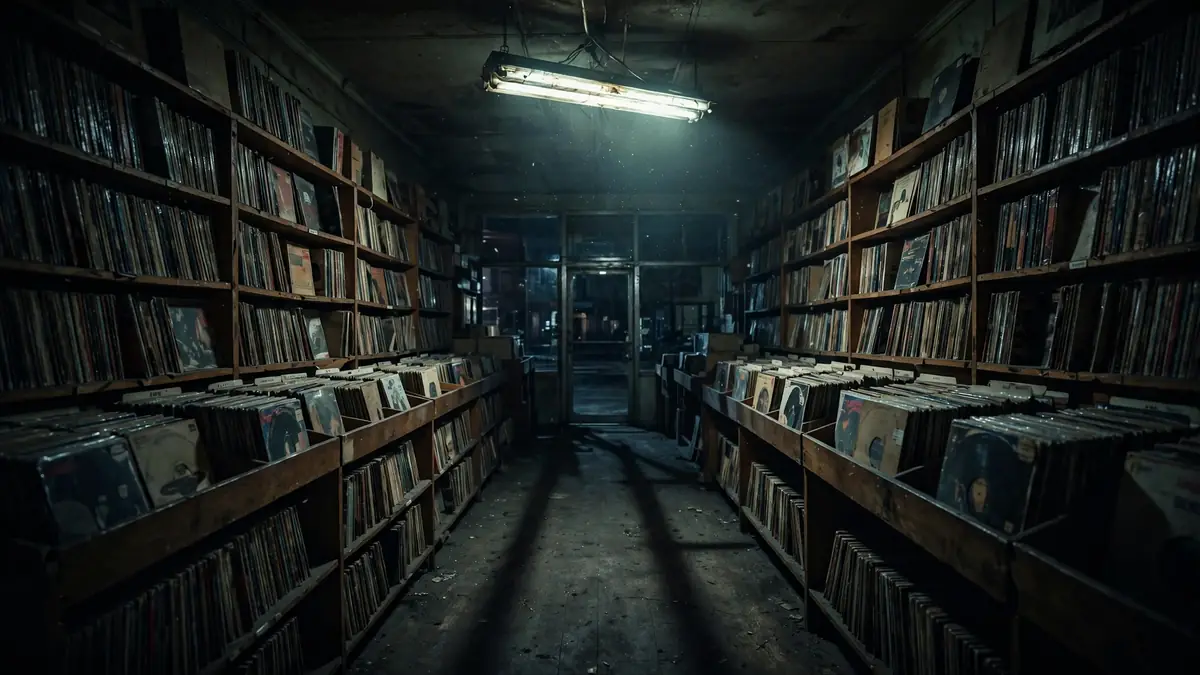
Obsession follows Bear, played by Michael Johnston, a socially awkward music store employee who is desperately in love with his co-worker and friend Nikki, played by Inde Navarette. From that unassuming setup, the film builds into a twist-laden horror story that has clearly connected with audiences far beyond the genre's usual base.
The film's economics are staggering. Made for under $1 million, its $519 million global gross represents a return on investment of more than 500 to 1 — a multiple that no $200 million blockbuster can approach. It has outperformed films with marketing budgets larger than its entire production cost, and it did so largely on the strength of word of mouth.
The records it now holds tell the story: highest-grossing film ever made for under $1 million; Focus Features' highest-grossing release of all time; the highest-grossing festival acquisition ever, beating The Blair Witch Project; and the highest-grossing film for Blumhouse's Atomic Monster label.
What Made It Work
Obsession's success is not an accident of timing — it reflects several forces converging in the theatrical market. Horror remains the most reliable genre in cinemas: its core audience shows up on opening weekend, it plays well in groups, and it generates the kind of social-media conversation that money cannot buy.
The festival launch was critical. Premiering at Toronto in September 2025 gave the film a prestige platform and, crucially, created the competitive bidding environment that drove its profile upward. Festival acquisitions have a long history of breaking out — The Blair Witch Project, which Obsession has now surpassed, is the template — but few have done so at this scale.
There is also the matter of originality. In a year dominated by sequels, rereleases, and IP-driven tentpoles, Obsession arrived as an original story from a young director with a distinct voice. Barker's background with Milk & Serial had already earned him a following among horror fans, and the film's twisty structure rewarded the communal, opening-weekend viewing experience that streaming cannot replicate.
The Theatrical Argument
The film's journey — from a Netflix straight-to-streaming offer to a $519 million theatrical phenomenon — has become the industry's favorite case study in the value of cinemas. It is worth asking what would have happened had Barker accepted the streaming offer. The film would likely have found an audience on Netflix. It would not have become a cultural event.
The theatrical run did something a streaming debut cannot: it created scarcity, urgency, and conversation. Audiences who might have scrolled past the film on a homepage instead bought tickets because their friends were talking about the ending. The box office numbers themselves became the story, generating a second wave of coverage that no marketing campaign could have purchased.
For Focus Features, the film is a landmark. The specialty label has long been associated with prestige cinema, but Obsession has given it the biggest commercial hit in its history — a reminder that the line between arthouse and mainstream is thinner than the industry often assumes.
A Career Made Overnight
For Curry Barker, the success represents one of the most dramatic career escalations in recent Hollywood history. Coming off Milk & Serial, he was a promising genre filmmaker. He is now the director of a half-billion-dollar film — a credential that will define every negotiation he enters from here on.
His comments on the podcast also reveal something about the anxieties of young directors in the streaming era. The fear that a buyer might "change my movie" or "take out certain parts that I like" is a real and widely shared concern among filmmakers weighing theatrical distributors against streaming platforms. Barker's instinct to protect the film — and the theatrical bet that followed — paid off beyond anything he could have imagined when he was, in his words, "still thinking maybe small theatrical release."
What Comes Next
The question now is what Obsession's success means for the films that follow it. Studios are notoriously bad at learning the right lessons from outliers — the temptation will be to chase "the next Obsession" with a formula, when the actual lesson is simpler: original voices, theatrical ambition, and the courage to let a film find its audience.
The film also strengthens the hand of every independent filmmaker arguing for a theatrical release over a streaming sale. The next time a festival breakout faces the Netflix-or-cinemas choice, Obsession's $519 million will be the number in the room.
For now, though, the story stands on its own: a movie made for less than $1 million, nearly sold straight to streaming, that became the biggest horror hit of the year and one of the most profitable films ever made. In an industry that increasingly runs on established franchises, Obsession is proof that the audience is still there for something new — if you give them a reason to leave the house.
Sources